Beyond the Buzzwords: Translating Sustainability into ROI
By Ysabella Langdon (Marketing Manager) and Vanesa Vargas (Marketing Coordinator), OPF.
For years, the sustainability community has operated in a world of "abstract ambitions": a world of moral imperatives, long-term climate targets, and social impact metrics. But while we’ve been talking about purpose, the rest of the boardroom has been talking about profitability, resilience, and risk.
This "language barrier" is the focal point of a recent, must-read piece by the World Economic Forum, "Why sustainability teams need to learn to speak the language of business," by Katharina Stenholm (Chief Sustainability Officer, DSM-Firmenich). In this piece, she lands a sharp point: if we keep using vocabulary our finance, operations, and executive colleagues don't share, we shouldn't be surprised when our priorities lose ground in the boardroom.
At OPF, we believe this isn't just a communication tip: it’s a survival strategy. Sustainability teams who treat communication as a strategic business imperative, not as an afterthought, are the ones who get budgets approved, get strategy adopted, and get sustainability written into the way the business actually operates.
Here’s what our strategic approach to sustainability communications looks like.
Translation is crucial
As the WEF article mentions, materiality is the bridge. As sustainability requirements expand, organizations are dealing with a growing number of frameworks, standards, disclosure expectations, and stakeholder demands. Trying to communicate everything at once often leads to confusion or “data fatigue”, fragmented reporting, or initiatives disconnected from business priorities.
Strong sustainability communication requires shifting the focus to what is material to the business and the stakeholders. As Stenholm exemplifies:
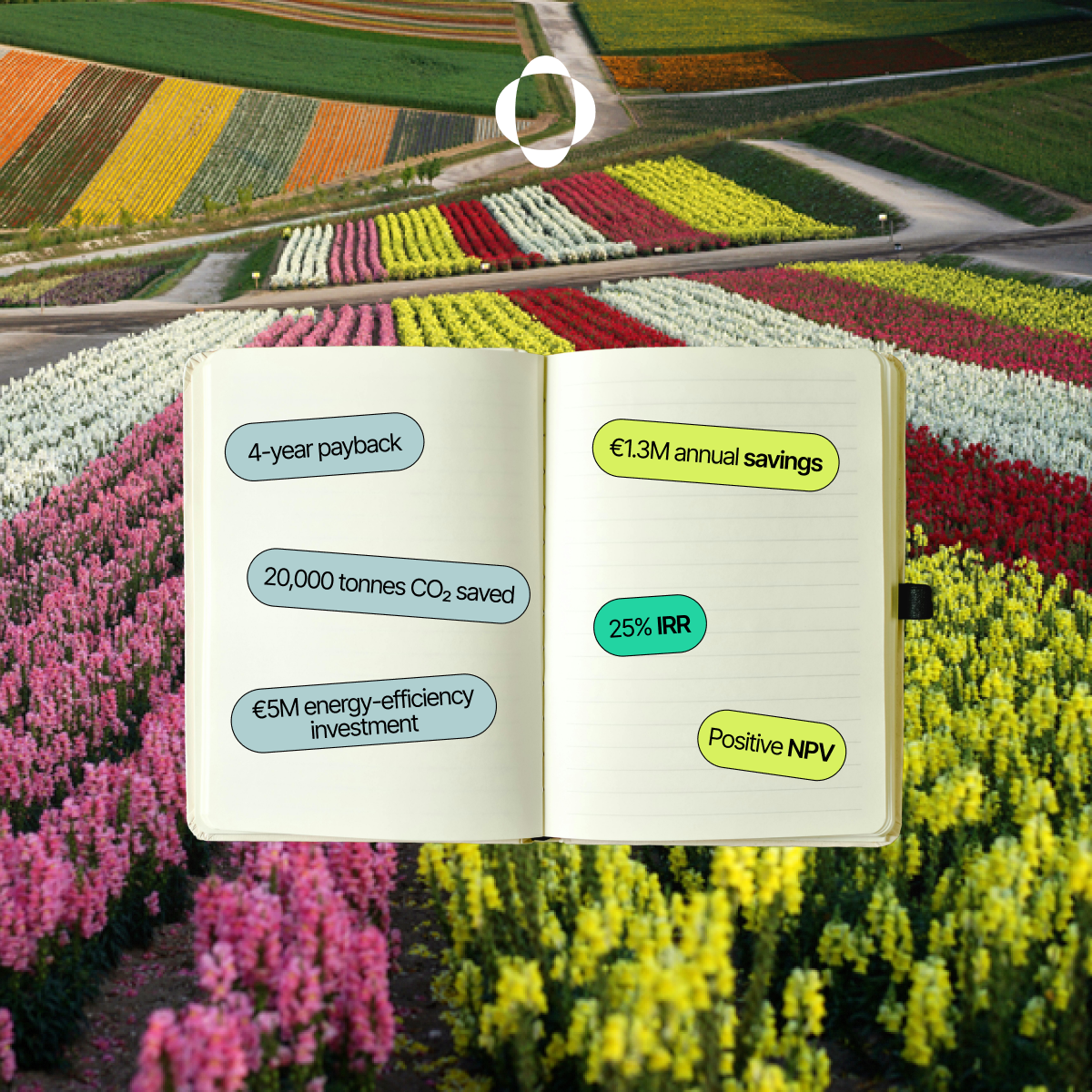
“A proposal for a €5 million energy-efficiency investment with a four-year payback and 20,000 tonnes of CO₂ savings may be rejected due to the payback being longer than three years. Reframing it as a project with €1.3 million annual savings, a 25% internal rate of return, positive net present value and avoided carbon price exposure could result in a quick approval. It’s the same project, with the same numbers. By using a different language, the outcome can be different.”
To reach that "different outcome," the translation can't be guesswork. Strong sustainability communication requires clarity around:
What matters most to the organization
Which risks and opportunities are financially material
Which metrics stakeholders actually care about
Where sustainability creates strategic advantage
It also requires recognizing that "the business" is not one audience. The CFO is listening for cost, risk, and capital allocation. The COO cares about supply continuity and operational efficiency. The CMO is thinking about brand differentiation and customer loyalty. The board is thinking about strategic positioning, regulatory exposure, and what analysts will ask on the next earnings call. The same initiative needs different framing for different rooms: that isn't spin, it's basic communication strategy.
Good translation isn't dilution; it's matching the language to the audience without changing the underlying truth, which is exactly the discipline any strong marketer or communicator practices every day.
Why the "language of business" is your new power move
The reason Stenholm's reframing example works isn't that she swapped one set of words for a "better" one. The CO₂ numbers are still in the proposal; they just moved from headline to footnote. What changed is which value driver she led with.
That's the move underneath strong sustainability communication. The same initiative can be pitched as a “saving the planet” mission or as a way to optimize resource efficiency and hedge against volatility: same numbers, different lever. A project's reception can depend entirely on which of those framings walks into the room first, and on whether the room reads it as a cost on the books or as value created.
When pitching a sustainability initiative, try this translation guide to move from a cost-center mindset to a value-creation mindset:
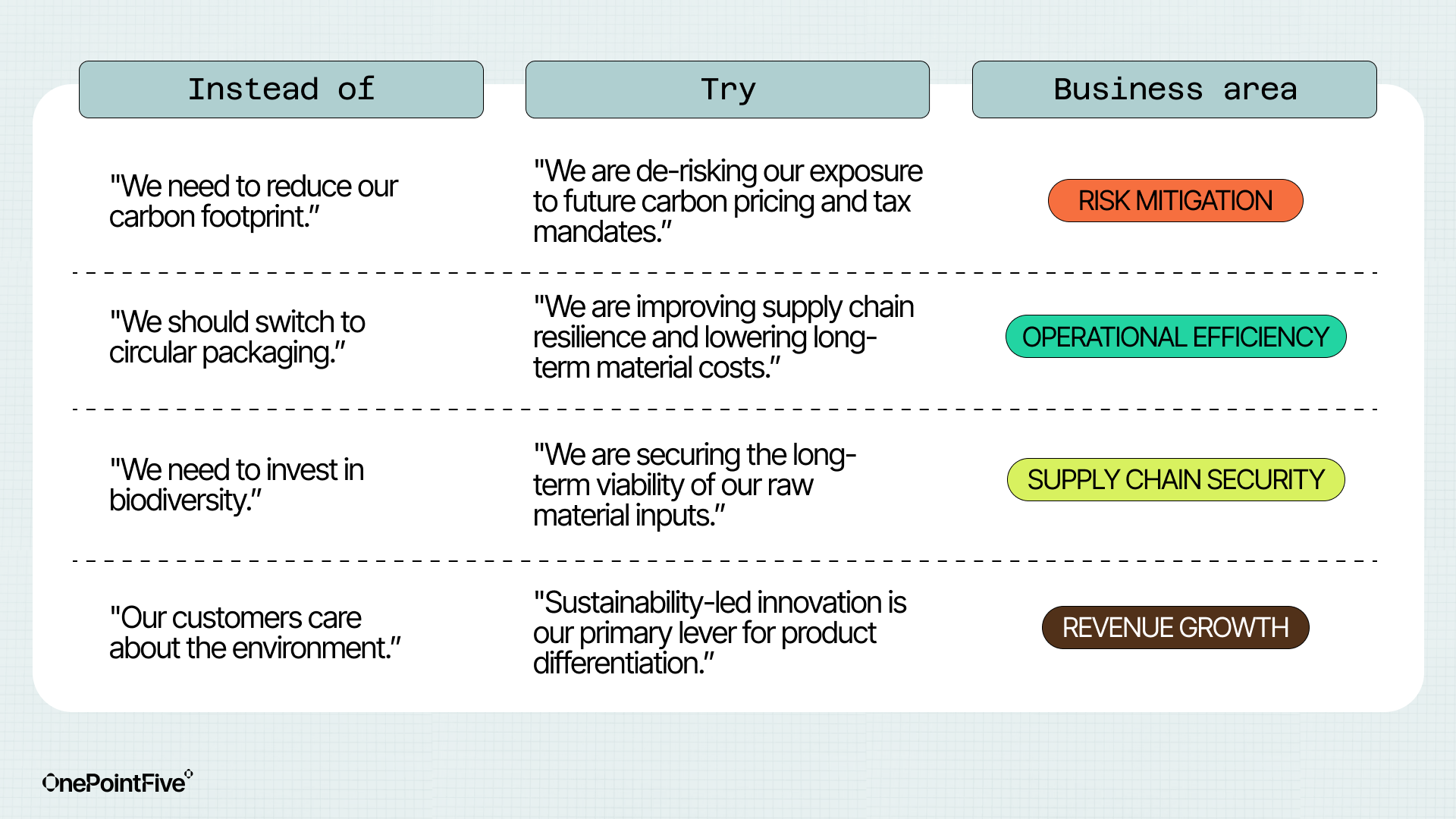
None of this is about hiding what sustainability actually does. It's about recognizing what actually moves the needle inside business conversations, and that good communication respects which conversation each audience is already in.
From compliance to strategic influence
This is where reporting and disclosure work becomes crucial: not as a compliance burden, but as the most rigorous, structured version of the translation craft we've been describing. Disclosure forces sustainability teams to articulate, in financial and operational language, exactly which issues are material, how they affect the business, and what the organization is doing about them. Done well, it's the clearest test of whether a sustainability function actually speaks the language of business, or only thinks it does.
But as we can see from the shifts in the global landscape, translating sustainability concepts is easier said than done. It requires a deep understanding of not just what to report, but how that reporting influences stakeholders, investors, and regulators. This is the difference between a "compliance burden" and a strategic asset.
Take this further
As the regulatory "alphabet soup"¹ (IFRS S1 & S2, GRI, TCFD, SASB) becomes the standard for business operations, simply knowing the terms isn't enough. You need a defensible process.
Our Sustainability Reporting & Disclosures course is built to help professionals move beyond theory and understand how reporting frameworks, investor expectations, and disclosure requirements actually work in practice. We decode the sustainability alphabet soup and the rest of the global mandate landscape, and put you through a full reporting workflow with real templates and a hands-on materiality lab.
You'll leave with a defensible process for what your organization needs to disclose, to whom, and by when and, just as importantly, the language to make that work land with the people who hold the budget.
Shape what we build next.
Want to go beyond Sustainability Reporting and Disclosures? The OPF Academy curriculum is shaped by what sustainability professionals are actually working on day-to-day. Share the topics you'd want covered, and we'll let you know the moment new courses go live.
¹ Alphabet soup: Industry shorthand for the dense, acronym-heavy landscape of sustainability reporting frameworks (IFRS, GRI, TCFD, SASB, CSRD, and others) that organizations have to navigate side by side, often with overlapping or competing requirements.