Cutting Through the Green Noise: Climate Risk and the AI Data Center Boom
By Abigail Dateo (Senior Associate), Vanesa Vargas (Marketing Coordinator) and Ysabella Langdon (Marketing Manager), OPF.
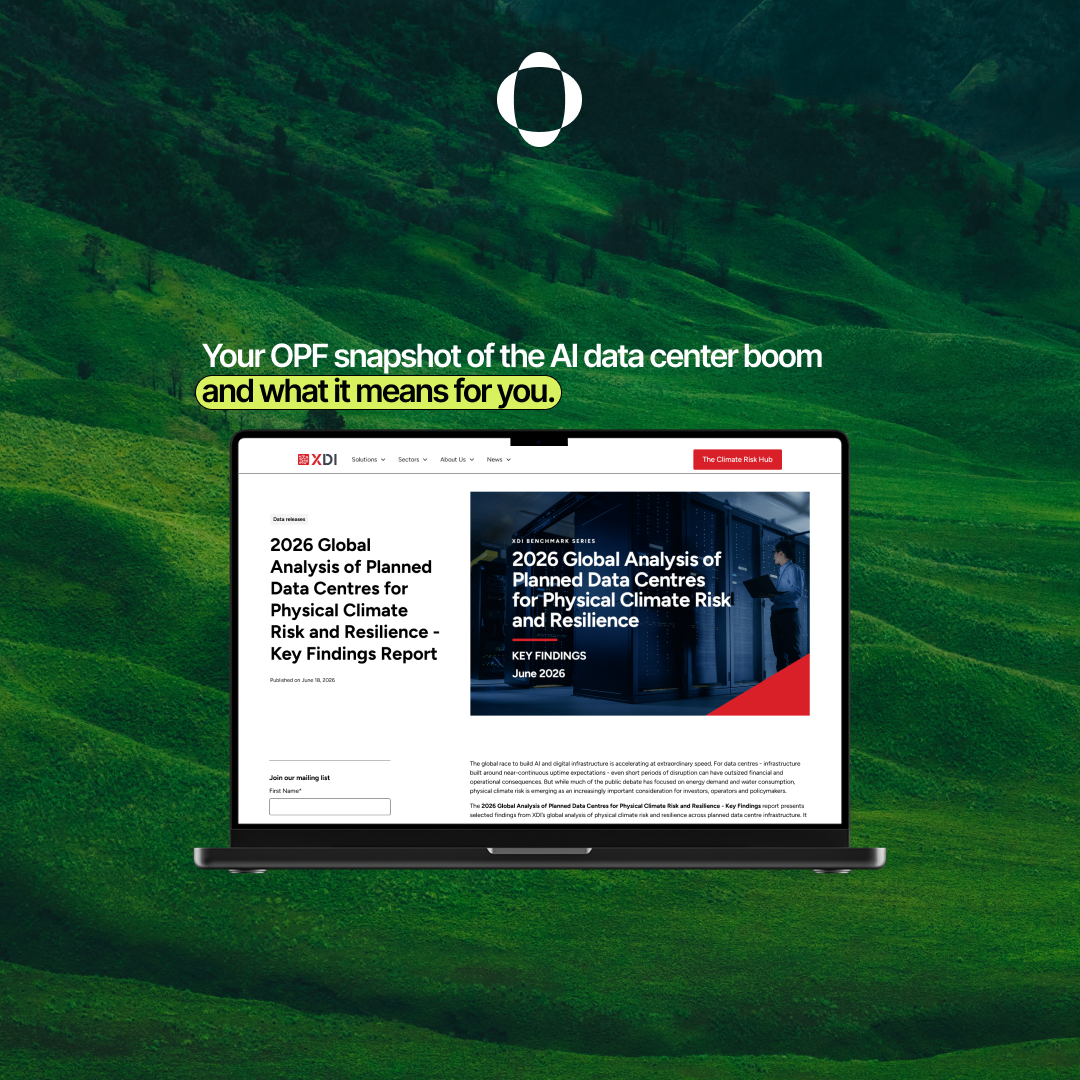
AI is driving one of the largest infrastructure buildouts in recent history, with thousands of new data centers planned to support growing demand for cloud computing and generative AI. On their latest report, XDI looked at 2,595 planned data centers around the world, emphasizing a key climate-related consideration affecting expansion plans: whether these facilities are being built to withstand the climate conditions they’ll face over the next several decades.
What XDI found is that climate resilience is becoming just as important as power capacity, connectivity and land availability when deciding where to build data centers; and, because most of these projects are still in the planning stage, organizations an opportunity to reduce future risk before construction begins.
The Data Snapshot
154 of 2,595 planned sites are already ranked high risk: 6% of planned data centers were classified as high risk for physical climate impacts under low-resilience construction standards, with most of these facilities located in North America and Europe.
289% projected increase in damage risk by 2100: Europe currently has relatively few high-risk facilities, but average physical damage risk is projected to increase by 289% by 2100. France pulled in US$69 billion of foreign data center investment in 2025, more than any other country, yet 26% of its planned facilities still rank high risk.
10x higher productivity losses due to indirect impacts: When XDI added indirect risk considerations, including the power, water, telecoms, transport and supply chains that a site depends on, to a study of 138 European data centers, projected productivity losses increased tenfold.
US$10.6bn → US$24.2bn insurance market opportunity: Swiss Re projects global data center insurance premiums will more than double by 2030, a sign the market is already repricing this climate exposure.
🧑🏫 The Reality
Climate resilience is becoming part of the business case for digital infrastructure.
Site selection, engineering standards and resilience investments all influence how well a facility can withstand flooding, extreme heat and other climate hazards throughout its lifetime. For organizations depending on infrastructure over the long-term, climate resilience is increasingly becoming a consideration alongside cost, connectivity and operational performance.
Physical damage is only part of the picture: data centers depend on reliable electricity, water, telecommunications, transportation and supply chains to stay operational. When those interconnected systems are included in the analysis, the potential business impacts become significantly larger.
🔔 The Alarm
"The race to build AI infrastructure is moving faster than climate resilience planning.”
As investment pours into new data centers, location decisions are still largely driven by power availability, connectivity and development costs. The concern is that physical climate risk often enters the conversation much later, after major investment decisions have already been made. For infrastructure expected to operate continuously for decades, overlooking those risks can translate into higher insurance costs, operational disruptions and expensive retrofits due to damage down the road.
Your Action Plan
For job seekers
Speak risk, not just sustainability: Employers increasingly value professionals who can explain how physical climate risks affect operations, insurance costs, asset performance and financial decisions.
Show you can use the tools: Familiarity with climate risk assessment, scenario analysis and resilience planning will become increasingly valuable across infrastructure, real estate, finance, and dedicated sustainability roles.
For active professionals
Bring climate risk into planning conversations early: Whether you are selecting operational sites or investing in digital businesses, early assessments of the underlying infrastructure will have a far greater impact on long-term resilience than retroactive fixes.
Partner with procurement: Ensure that sustainability goals are considered and prioritized in long-term purchasing contracts to give suppliers the security they need to invest in green tech.
For businesses & leaders
Include physical climate risk in capital allocation: Evaluating the climate resilience of both your physical assets and your critical digital vendors before making major commitments can drastically reduce future operational disruptions, insurance premiums, and emergency migration costs.
Treat resilience as an investment decision: System uptime, insurability and long-term asset performance are increasingly tied to climate resilience; as Swiss Re’s premium forecast shows, the market is already pricing this exposure into the bottom line.
The Bottom Line
As investment in AI infrastructure accelerates, climate resilience is becoming an increasingly important factor in where and how data centers are built. Organizations that account for physical climate risk early will be better positioned to protect operational continuity, manage costs and strengthen the long-term value of their operations and investments.
Enjoyed this edition? Click here to explore the rest of our Cutting Through the Green Noise series for concise breakdowns of the sustainability reports, research and trends shaping climate and business.
Looking to explore Climate Risk further?
Check out our From Climate Risk to Business Action series, where you’ll learn how organizations can identify, assess and integrate climate risk into business strategy.
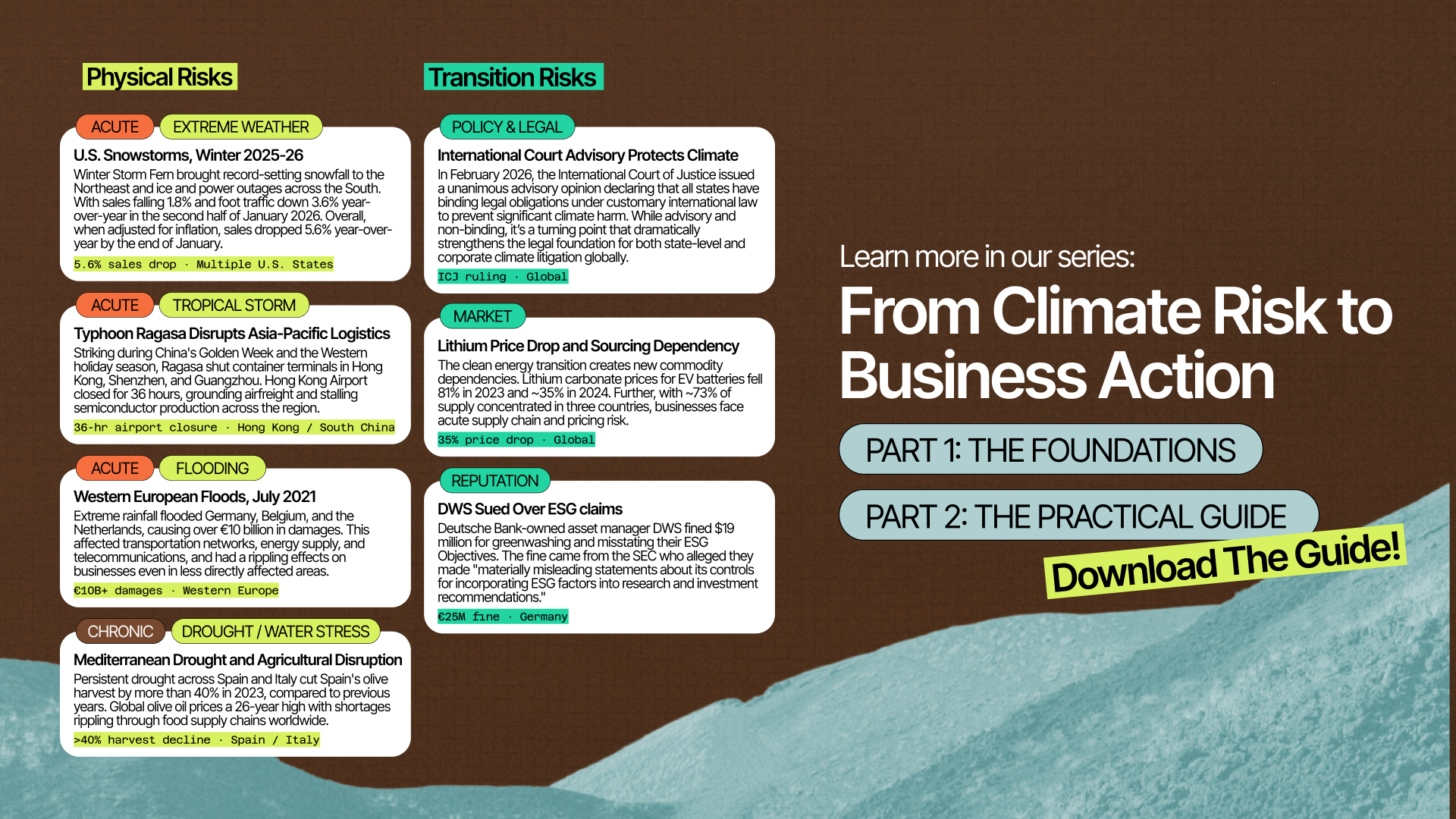
On Part 1, The Foundations, we break down the fundamentals of physical and transition climate risk, why they matter for businesses, and how to integrate them into decision-making. For a hands-on approach, download our practical guide on Part 2: Assessing & Integrating Climate Risk into Business Strategy, featuring a repeatable climate risk assessment framework, a real-world case study and a curated list of tools to help you get started.