
Master GHG Accounting to Drive Climate Action
Turn emissions data into competitive advantage with practitioner-led training that goes beyond theory. This module equips professionals with the technical skills to measure, analyze, and report on organizational carbon footprints using industry-standard methodologies. Your workforce will learn to navigate the complete GHG accounting process, including setting boundaries, calculating emissions, and identifying material reduction opportunities across your value chain.
This technical training is designed for teams who need to:
Build the carbon accounting fluency required for regulatory compliance and voluntary reporting
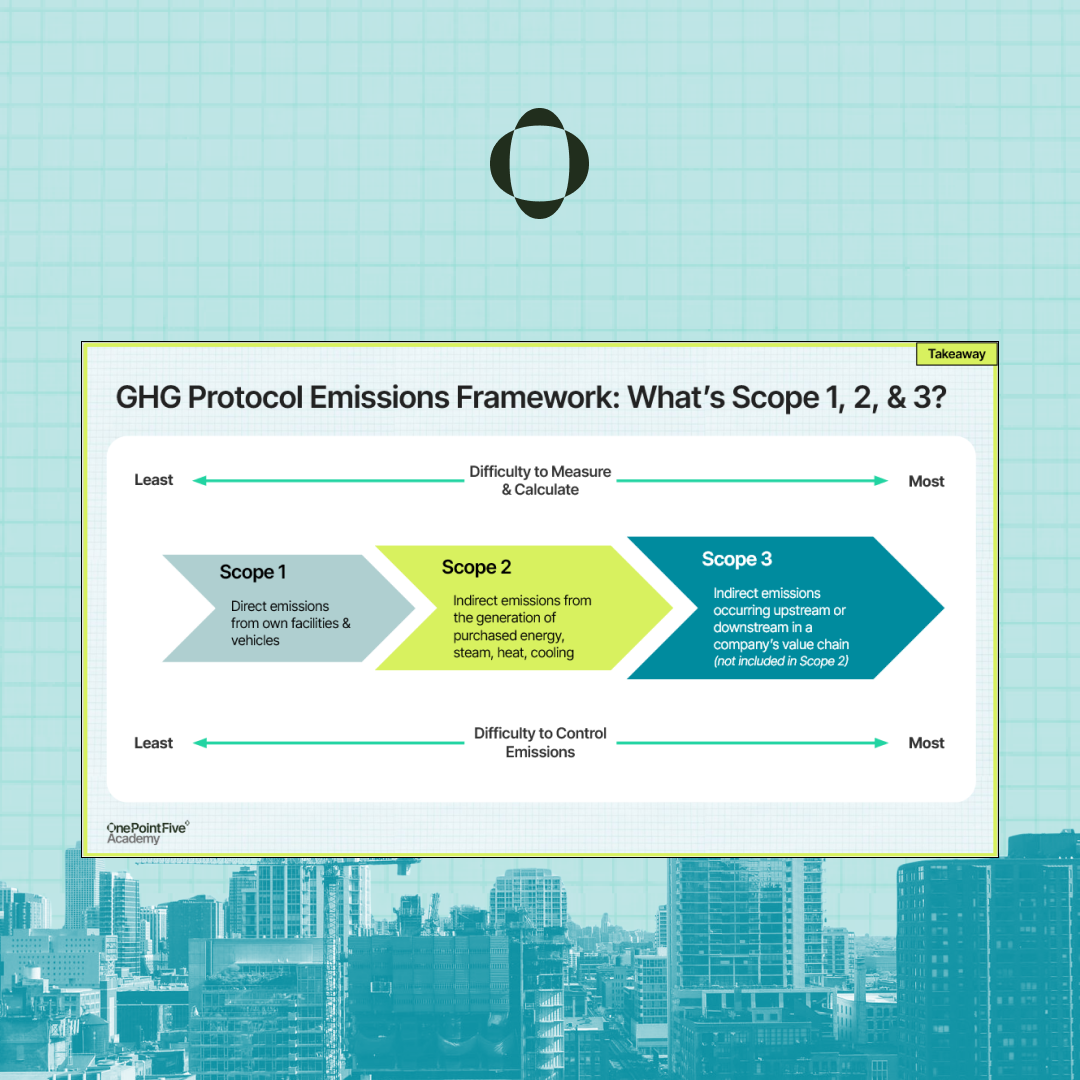
Confidently quantify organizational climate impact across Scopes 1, 2, and 3
Identify the most material emissions sources for their industry and prioritize data collection efforts
Support sustainability reporting and disclosure requirements (CDP, CSRD, SEC Climate Rule)
Transform emissions data into strategic insights that drive reduction targets and business decisions
Speak the language of carbon accounting with internal stakeholders and external partners
You can't manage what you don't measure
GHG accounting is the cornerstone of effective climate action, yet only 7% of companies responsible for 40% of global GHG emissions measure their emissions comprehensively. Organizations that master emissions measurement unlock significant advantages: 40% of large companies expect $100+ million in annual benefits from meeting reduction targets. With regulatory requirements expanding globally and stakeholders demanding transparency, professionals skilled in carbon accounting are essential for business success.
Learning outcomes
By completing this module, your team will be able to:
Enumerate and categorize emissions sources across Scope 1, 2, and 3 using the GHG Protocol framework
Apply the five key principles of GHG accounting (relevance, completeness, consistency, transparency, accuracy) to ensure credible reporting
Set appropriate inventory boundaries (temporal, organizational, and operational) for different business contexts
Calculate GHG emissions using activity-based data and emission factors across all three scopes
Identify the most material emissions categories for different industries using sector-specific guidance
Evaluate data collection methodologies and recommend appropriate approaches based on data availability
Understand both location-based and market-based methods for Scope 2 emissions reporting
Navigate the complete GHG calculation process from boundary setting through reporting and action planning
Discuss the limitations of GHG accounting and recognize when to expand beyond carbon metrics
Recommend reduction strategies tailored to specific emissions sources and industry contexts
Optional add-ons
2-3 hour Labs: Apply GHG accounting methodologies to real company datasets with hands-on Excel/modeling exercises
1-2 hour Workshops: Sector-specific deep dives on material emissions sources and reduction strategies for your industry
Module details
Duration: 2-3 hours total learning time
Materials: Video content, interactive exercises, real company case studies, calculation templates, emissions factor databases, downloadable resources
Prerequisites: Module 1 recommended but not required | Designed to build on climate strategy fundamentals
