
Master Life Cycle Analysis for Product Optimization
Move beyond organizational emissions to understand product-level impact through practical LCA methodology and practitioner-led training. This module equips professionals to evaluate products holistically: from raw material extraction through manufacturing, use, and end-of-life disposal. Your workforce will learn to identify environmental hotspots across a product's full life cycle and use that data to drive decisions about design, materials, and circularity that reduce impact while maintaining business viability.
This specialized training is designed for teams who need to:
Understand how product-level emissions differ from organizational GHG inventories
Evaluate the environmental impact of product design decisions across multiple categories
Identify emissions hotspots in product life cycles to prioritize reduction efforts
Support sustainable product development and circular economy initiatives
Communicate product environmental performance to customers and stakeholders with credibility
Comply with emerging product-level disclosure requirements and eco-labeling standards
Make informed decisions about materials, packaging, and end-of-life strategies
Products tell the full story beyond organizational boundaries
While organizational GHG accounting captures what happens inside your company, up to 90% of environmental impact often occurs in the value chain: in raw materials, customer use, and end-of-life. Life cycle thinking is essential for companies pursuing circular economy models, responding to consumer demand for sustainable products, and meeting evolving regulations. With regulatory requirements expanding globally, teams who can conduct product-level assessments position themselves as strategic partners in innovation and sustainability transformation.
Learning outcomes
By completing this module, your team will be able to:
Articulate the three key differences between organizational-level and product-level emissions accounting
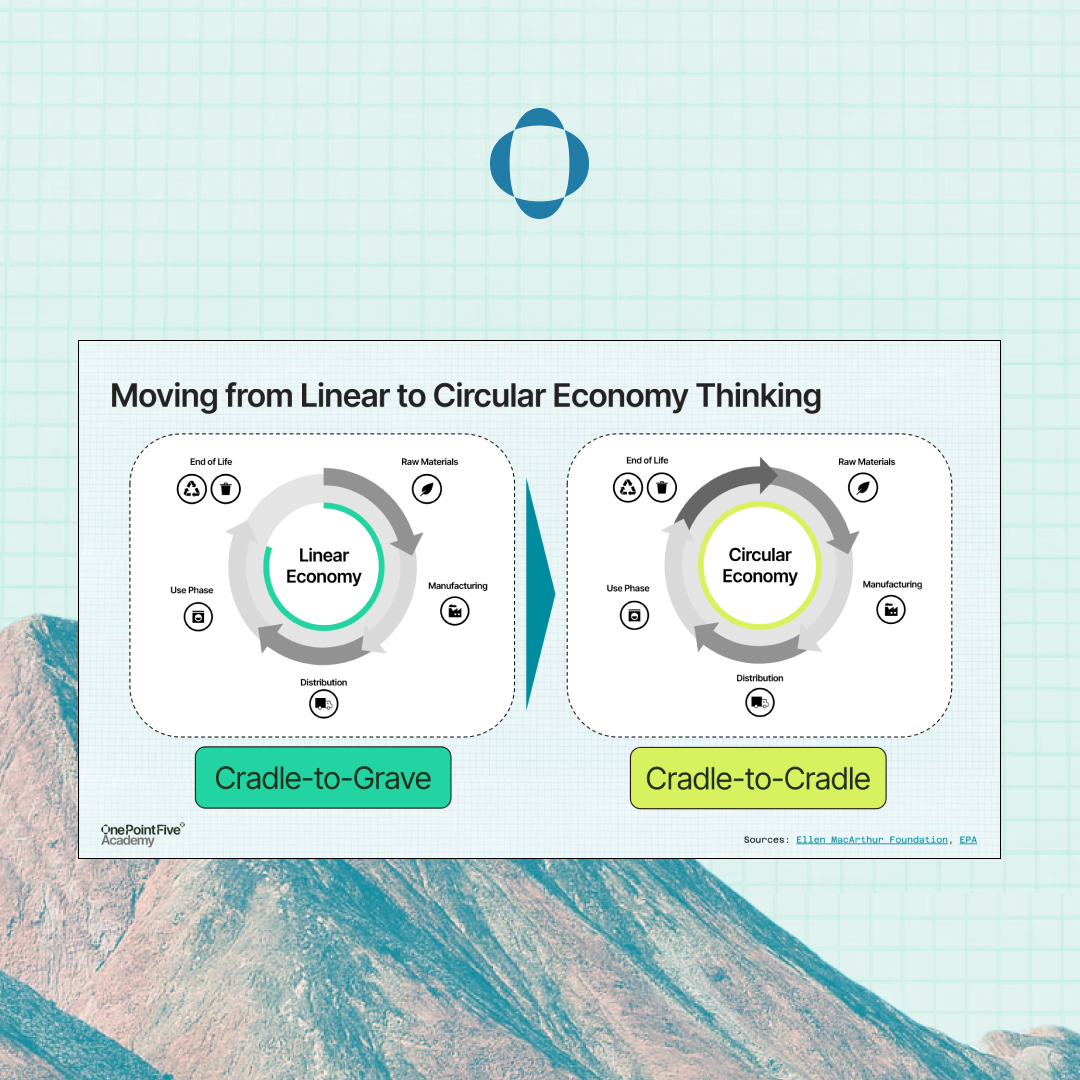
Explain the cradle-to-grave (and cradle-to-cradle) approach to environmental assessment
Recall the main environmental impact categories assessed through Life Cycle Analysis (LCA) beyond just carbon (water, waste, ecosystems, toxicity)
Map product life cycle stages: raw material extraction, manufacturing, distribution, use phase, and end-of-life
Identify environmental hotspots across a product's life cycle using screening LCA techniques
Provide concrete examples of how changes in product design, materials, and packaging impact overall footprint
Evaluate trade-offs between different environmental impact categories in product decisions
Discuss the limitations of life cycle analysis in GHG accounting and when to expand assessment scope
Apply circular economy principles to minimize product-level environmental impact
Use LCA insights to inform sustainable product development and supply chain decisions
Optional add-ons
2-3 hour Labs: Conduct hands-on product LCA exercises using real product data and environmental databases
1-2 hour Workshops: Industry-specific product optimization workshops focused on your sector's material hotspots
Module details
Duration: 2-3 hours total learning time
Materials: Video content, product case studies, LCA screening tools, real company examples, downloadable resources
Prerequisites: Module 2 (GHG Accounting) recommended to understand organizational vs. product-level emissions | Designed to build on Scope 3 concepts
