
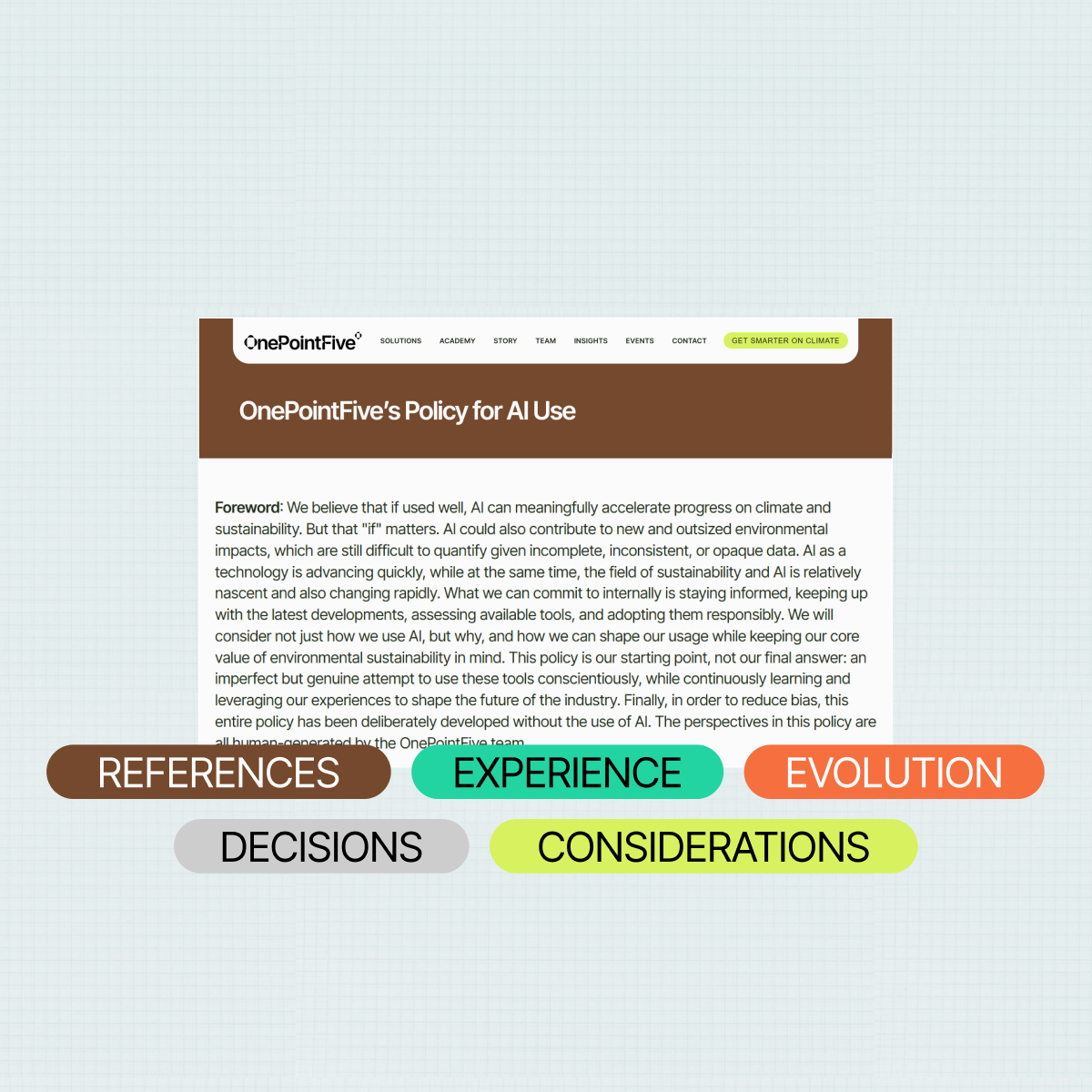
For organizations trying to use AI responsibly, it can be difficult to build thoughtful guardrails when the technology, research, standards, and best practices are changing almost as quickly as you can keep up with them.
Building our own AI policy at OnePointFive meant asking questions without easy answers. How do we balance AI's potential to accelerate our climate work against its environmental and societal risks? How do we protect client data? Where should human judgment remain non-negotiable? And what happens when the research itself is inconclusive?
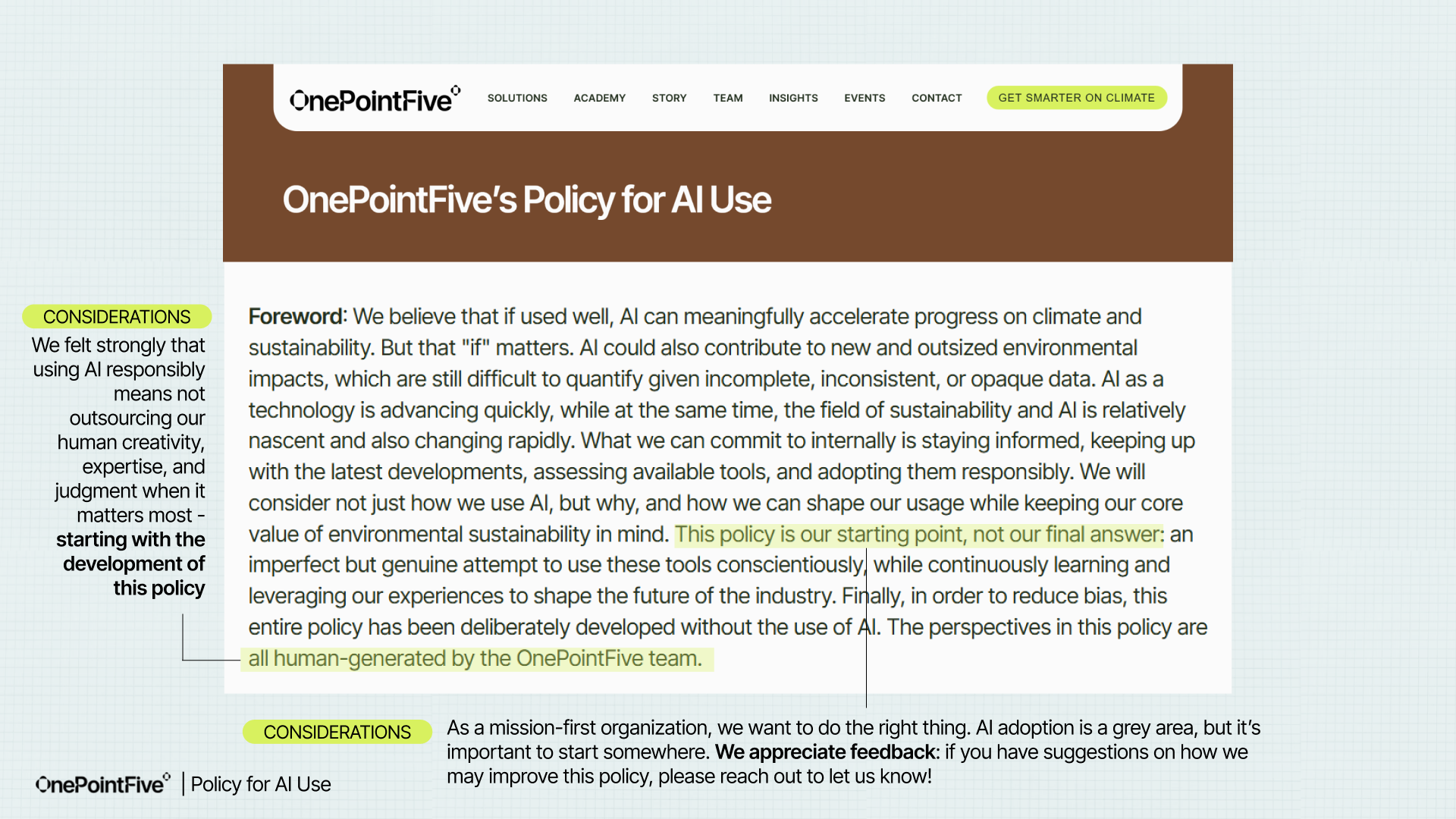
We believe AI, if used well, can meaningfully accelerate climate progress. But that 'if' matters. As we build our own AI policy at OnePointFive, we’re working through the questions and complexities that come with responsible AI, and sharing what we learn to help shape what comes next.
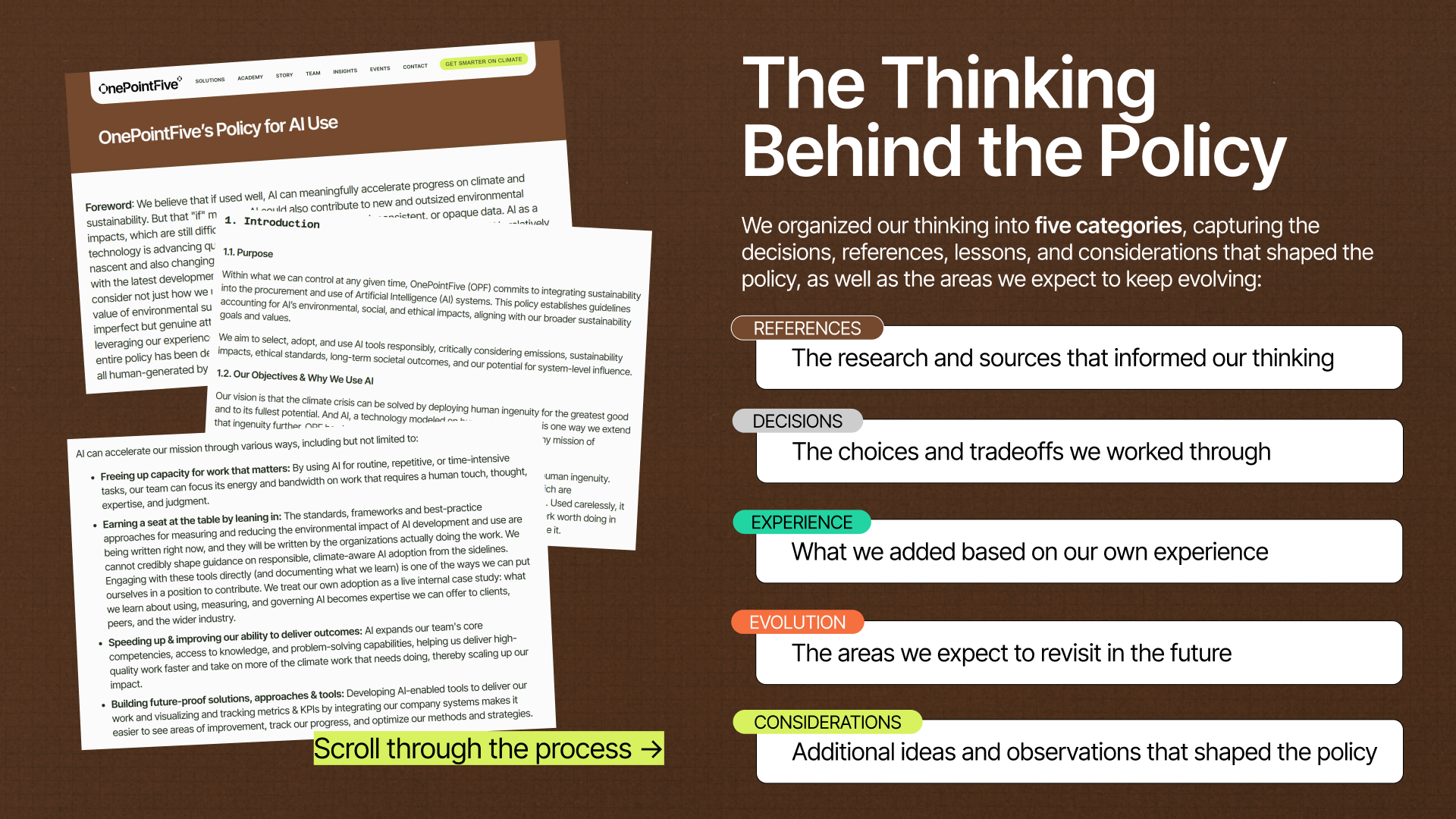
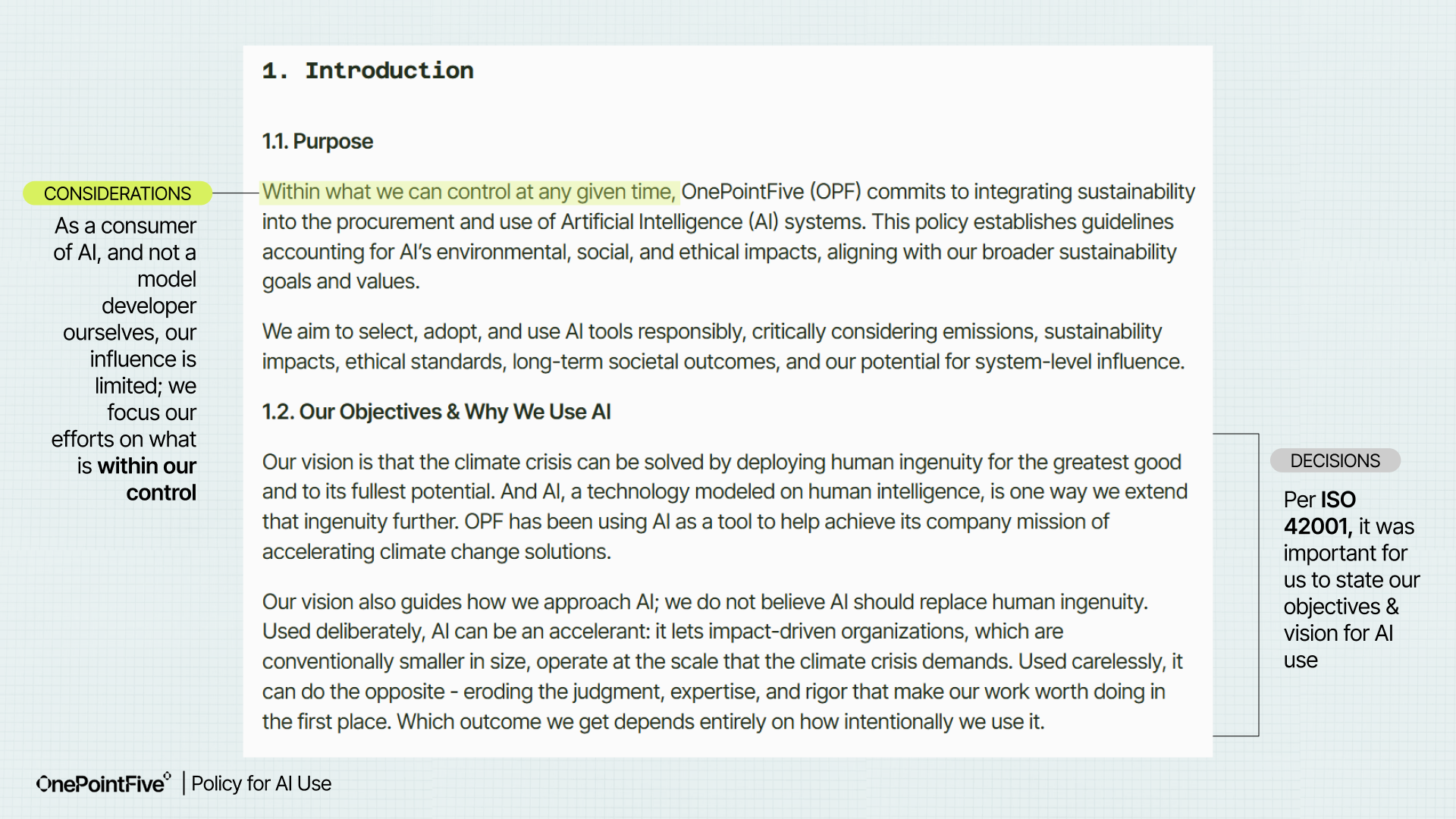
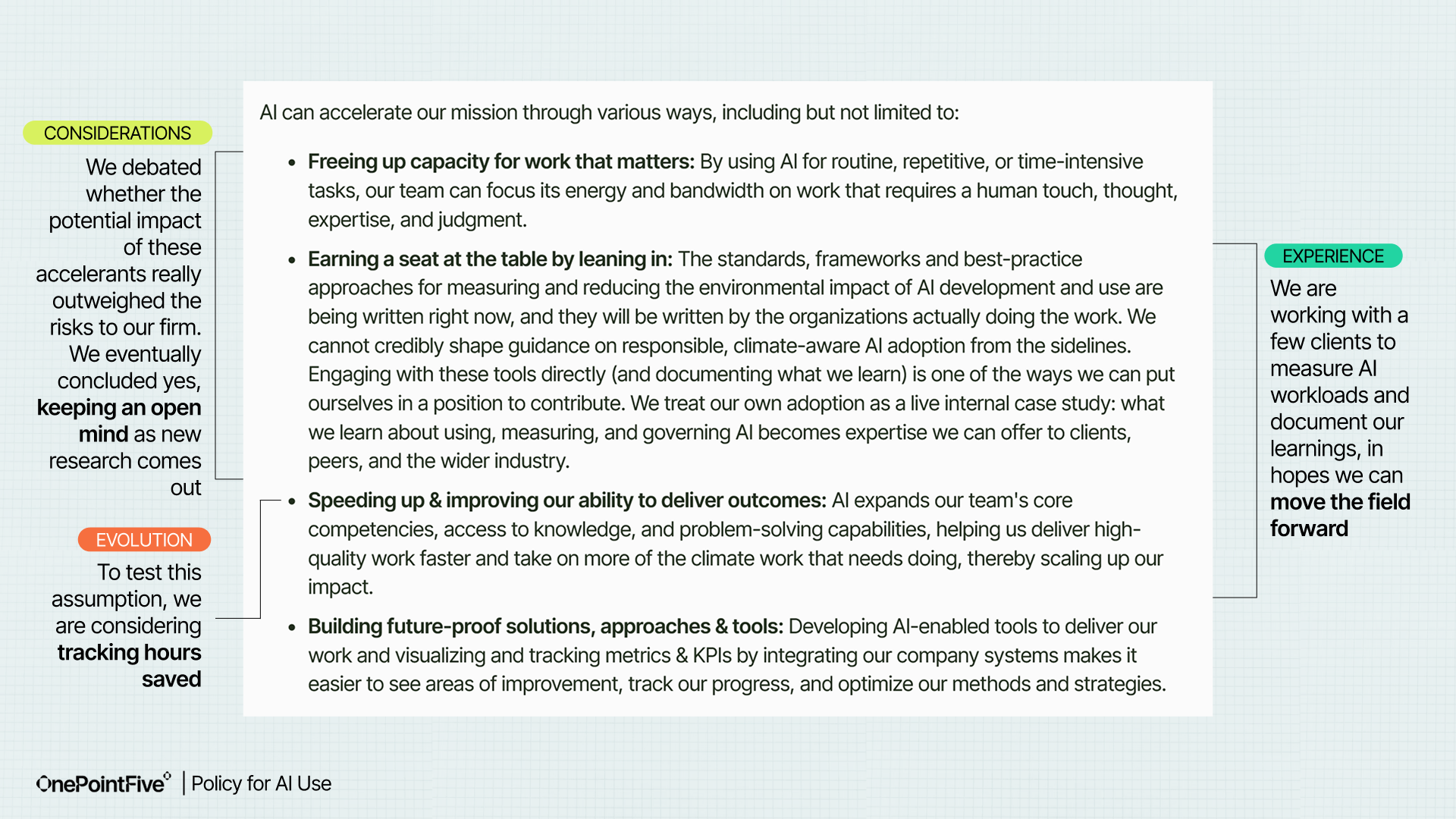
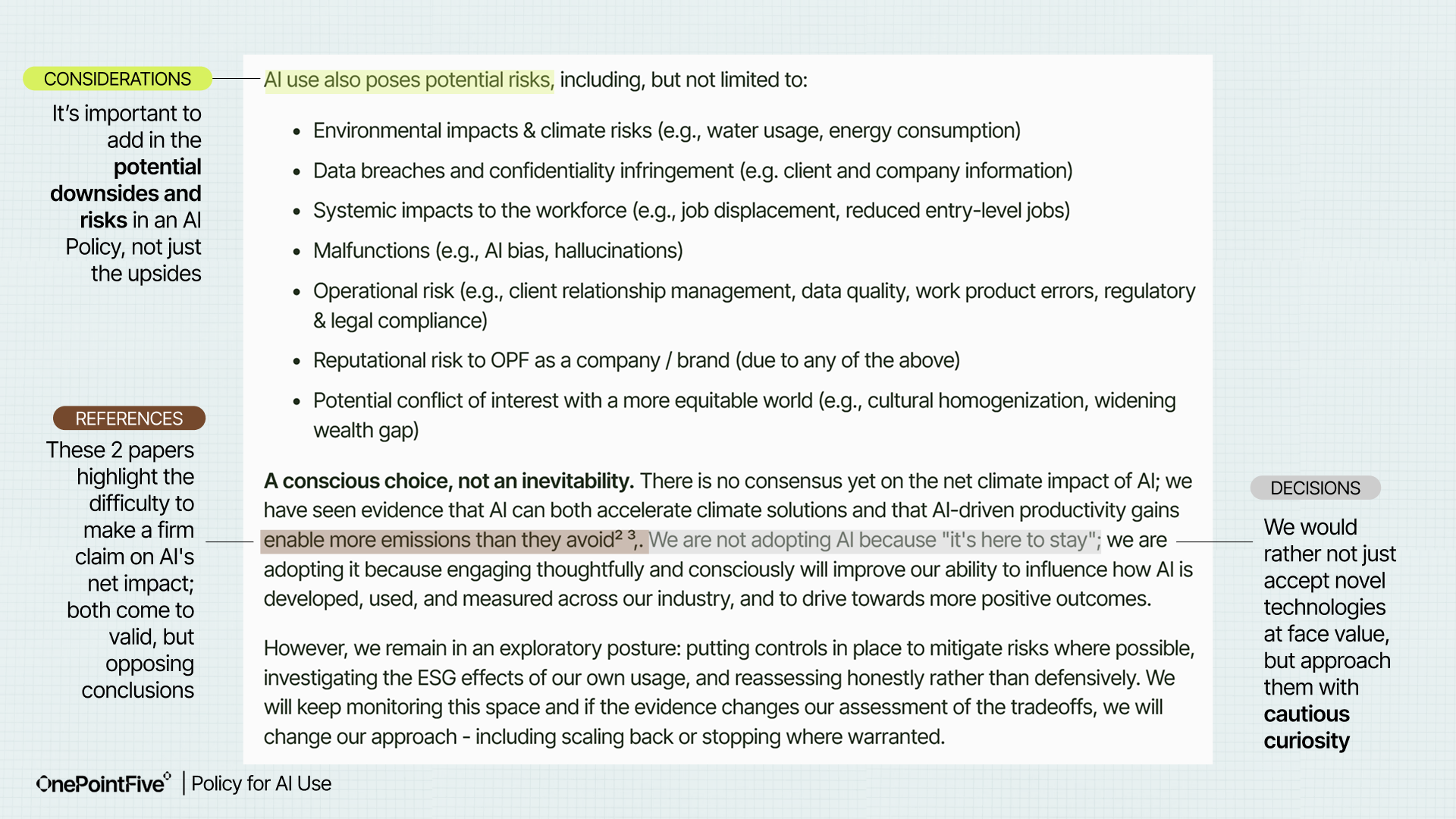
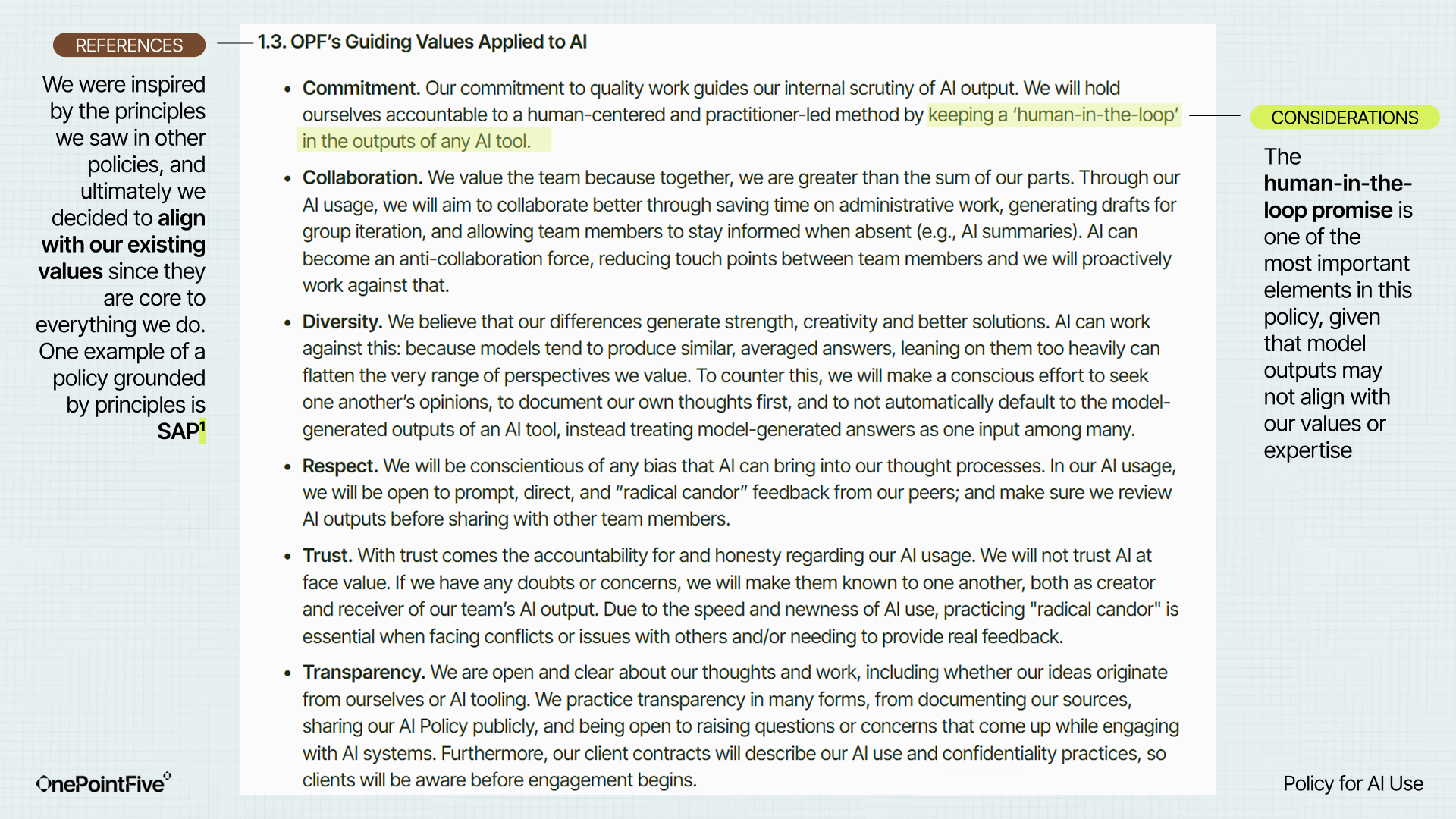
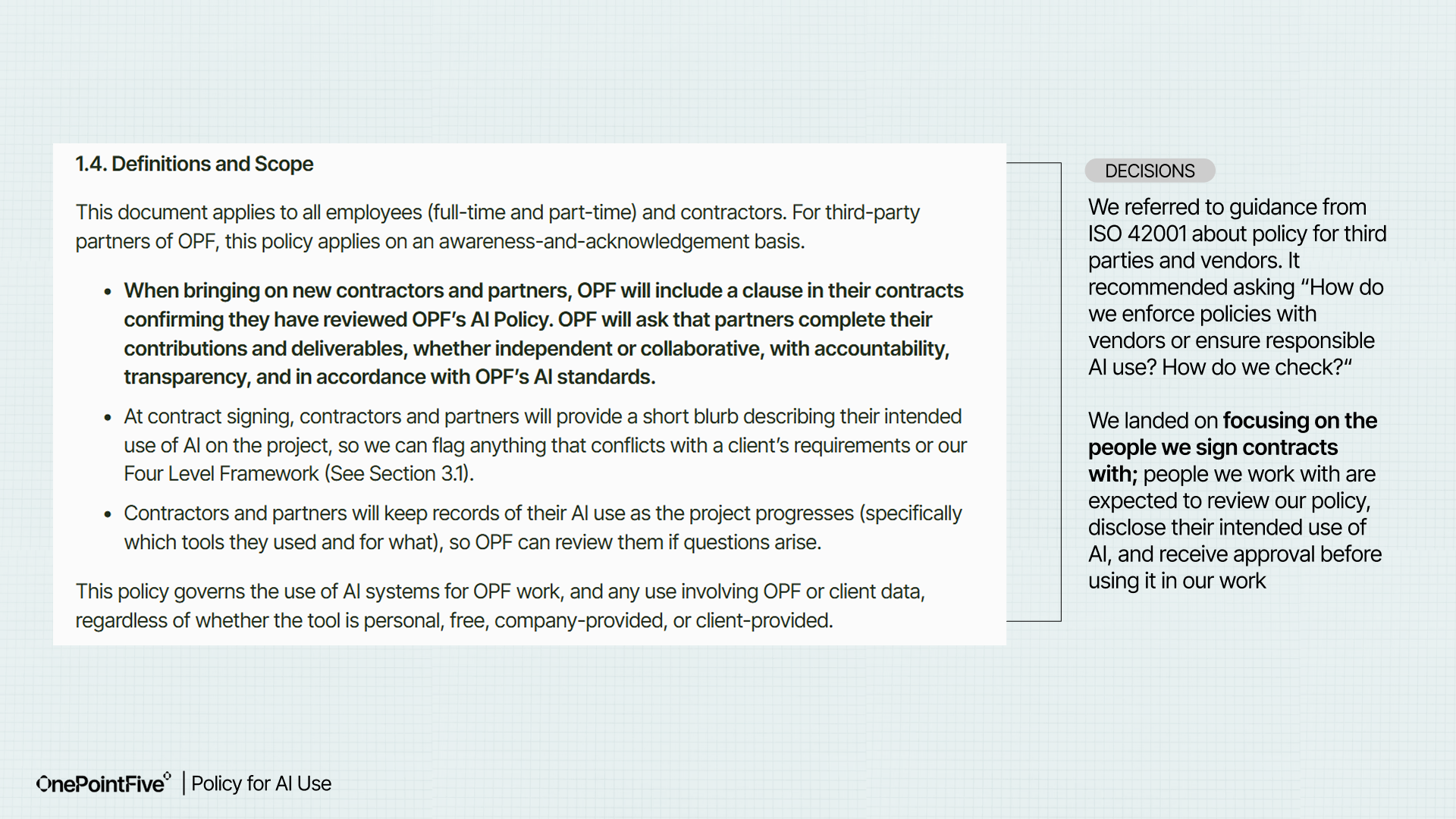
Scroll through the gallery below for a behind-the-scenes look at the thinking that shaped our Policy for AI Use, including the questions we debated, the research and frameworks we drew from, the tradeoffs we made, and the areas we already know will need to evolve.
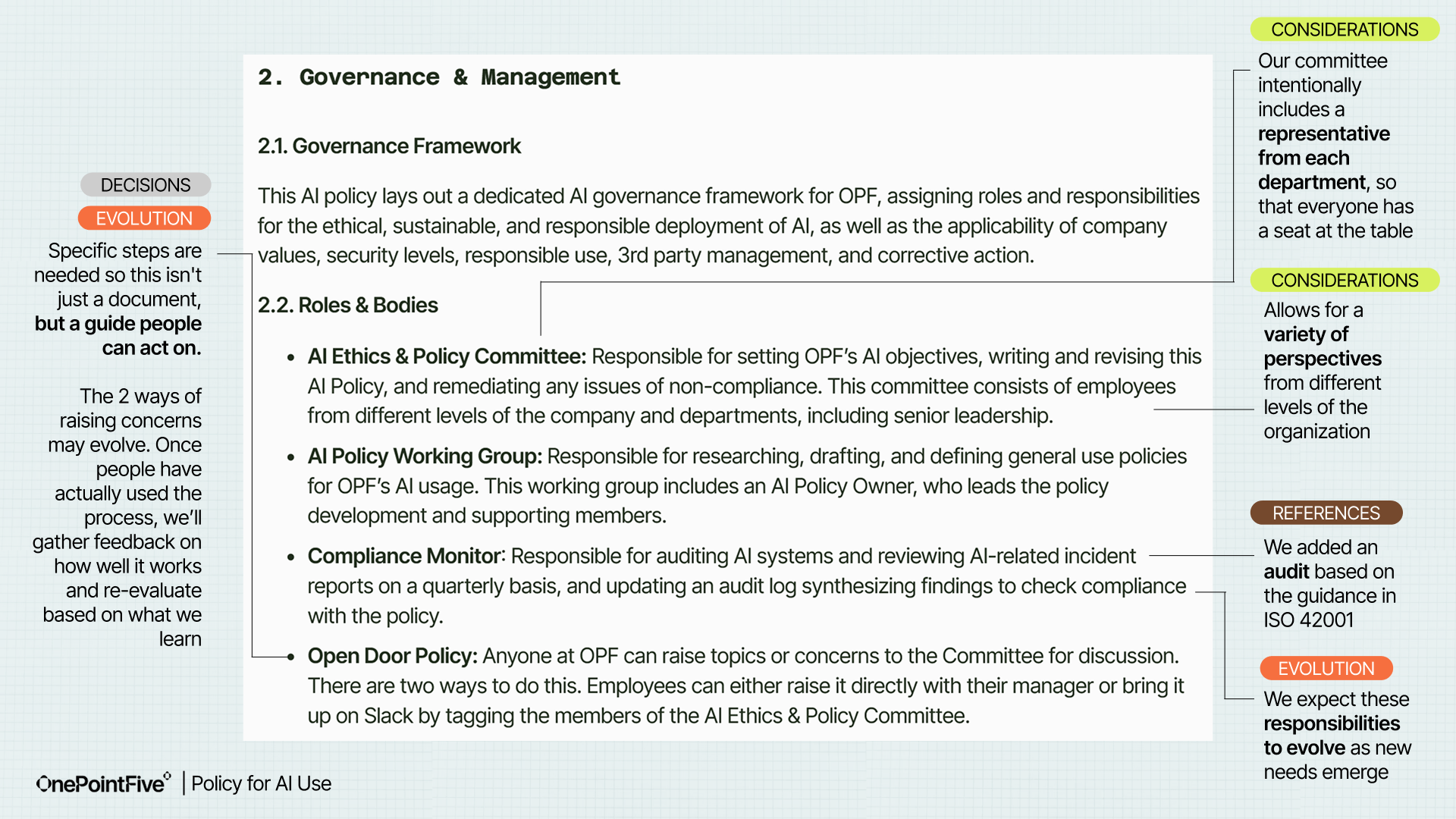
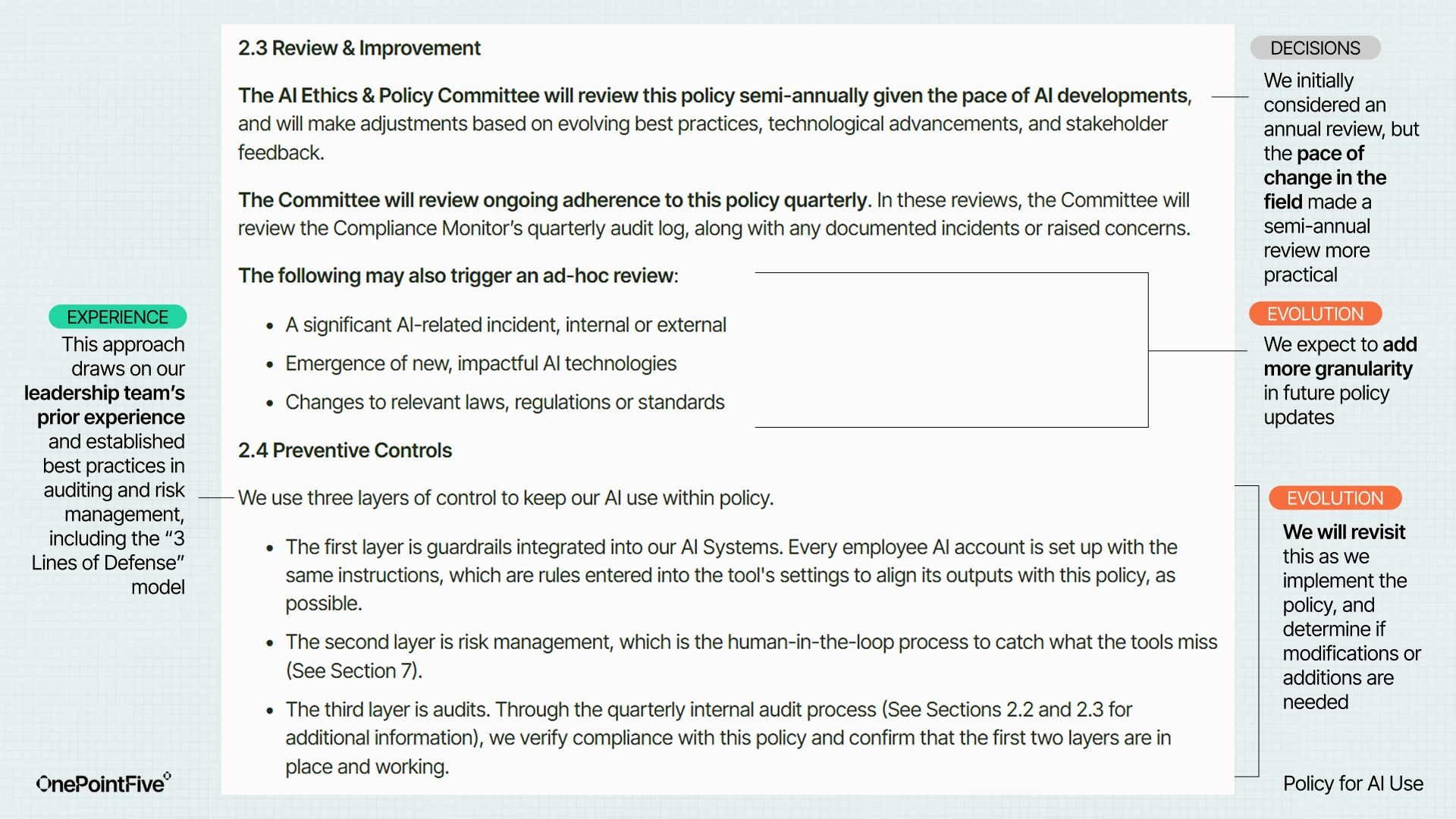
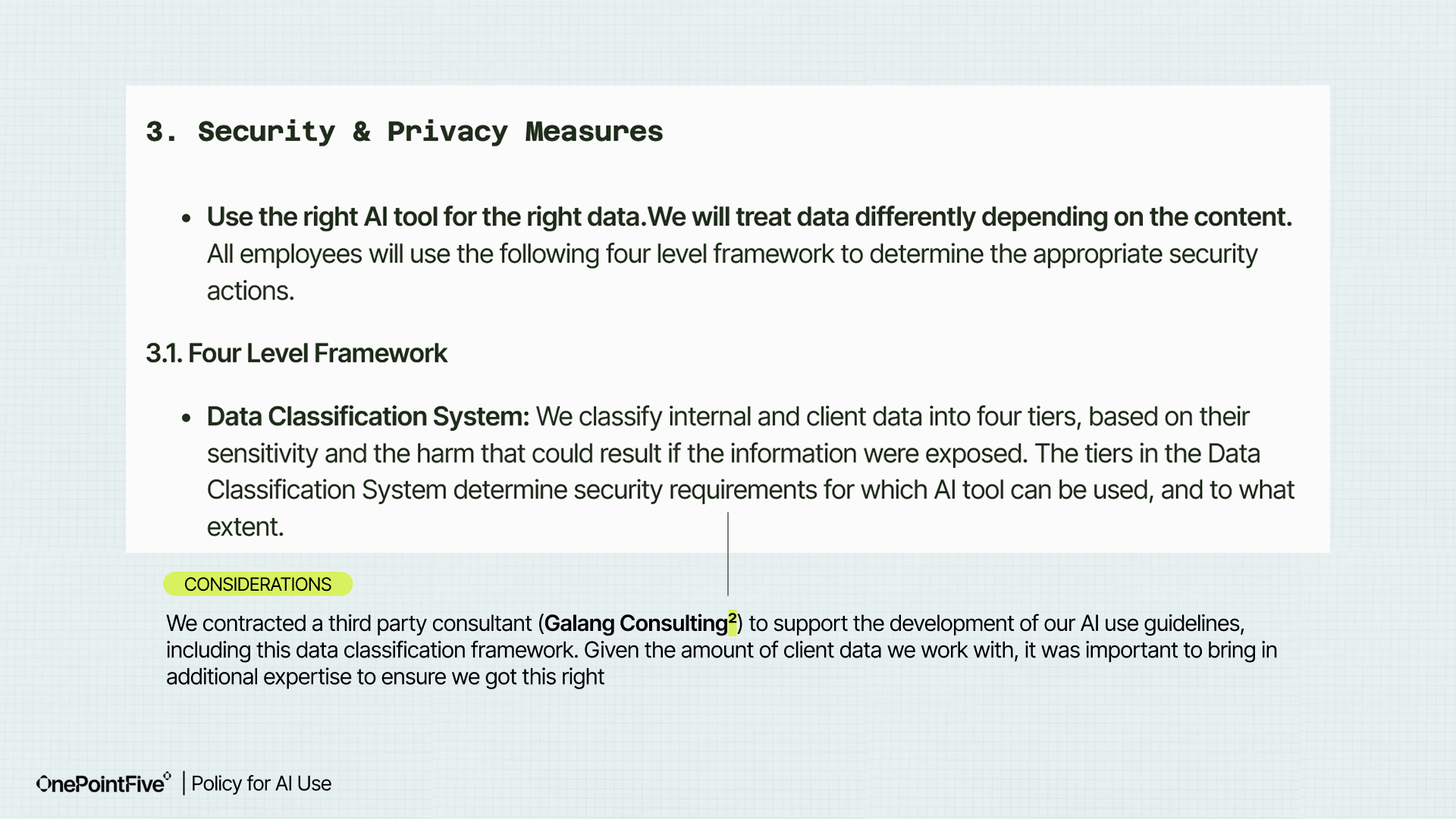
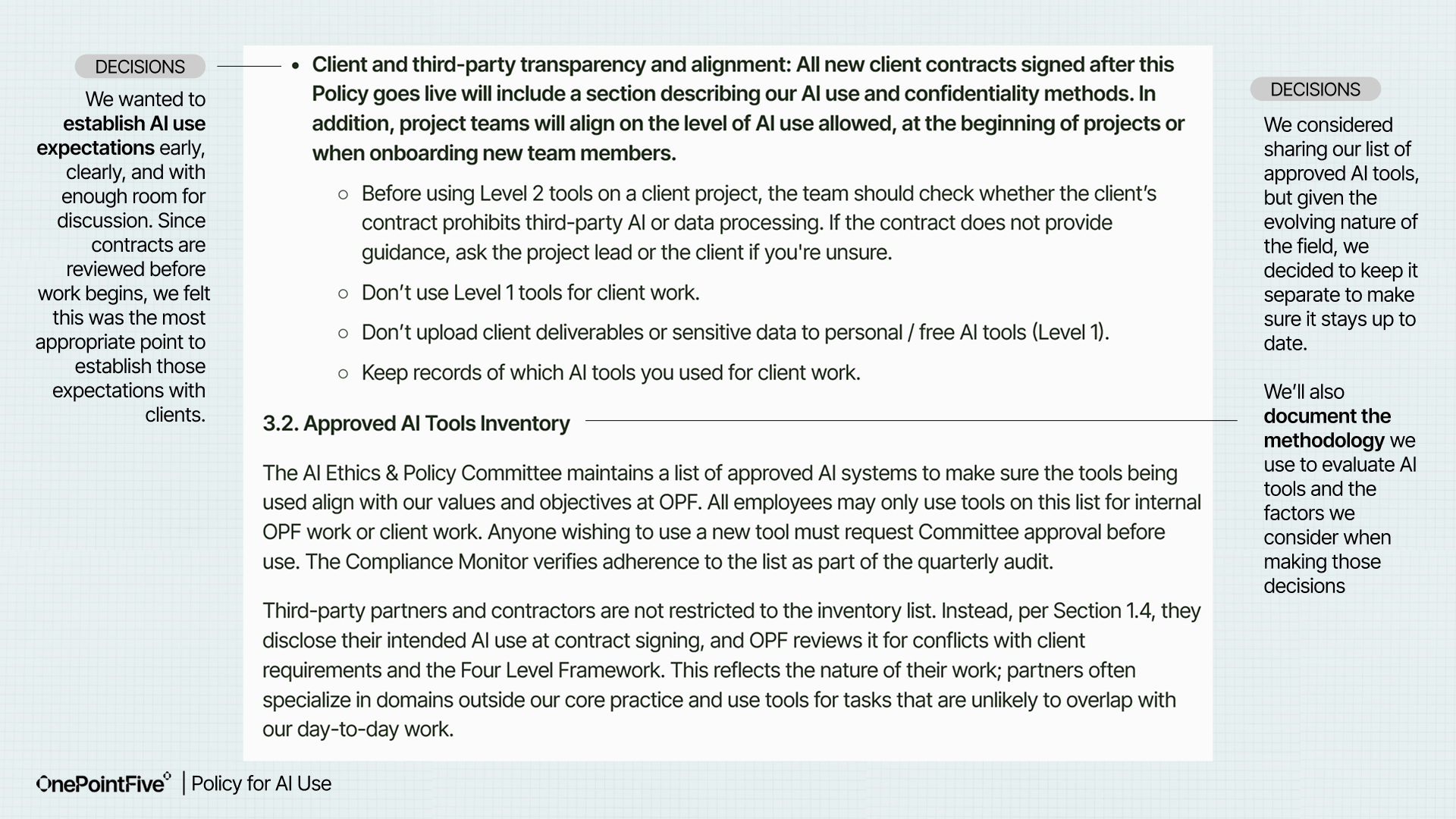
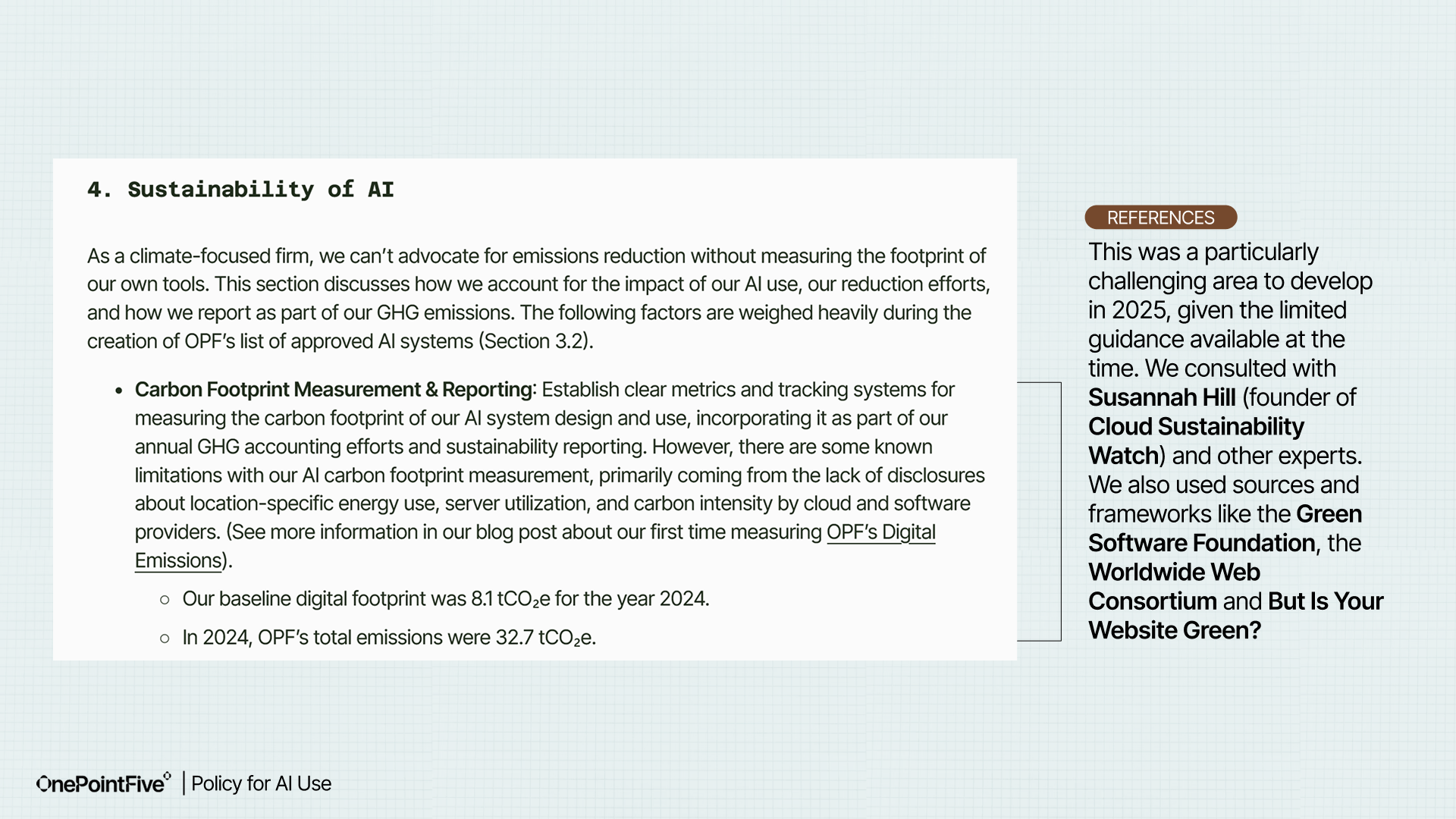
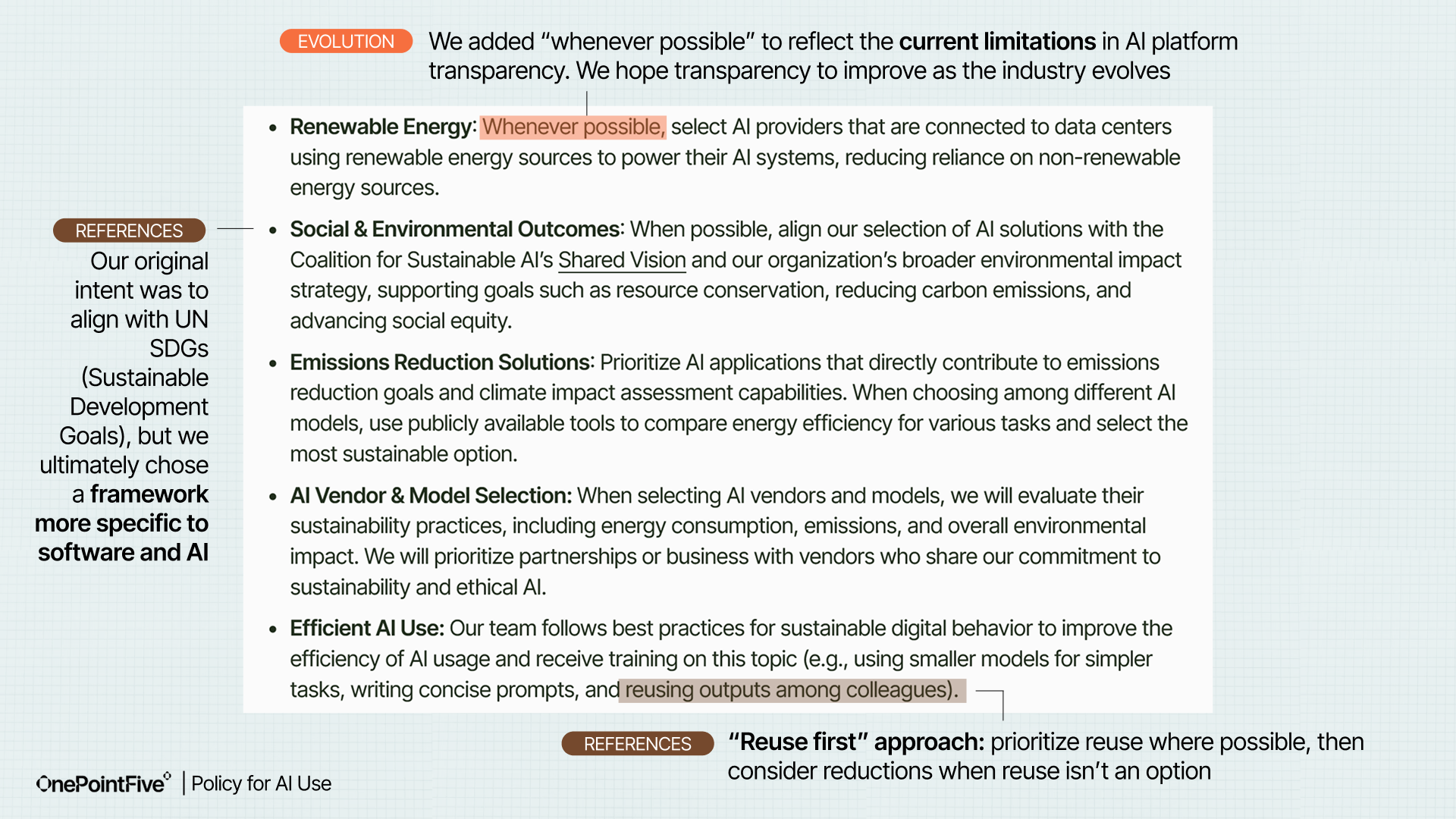
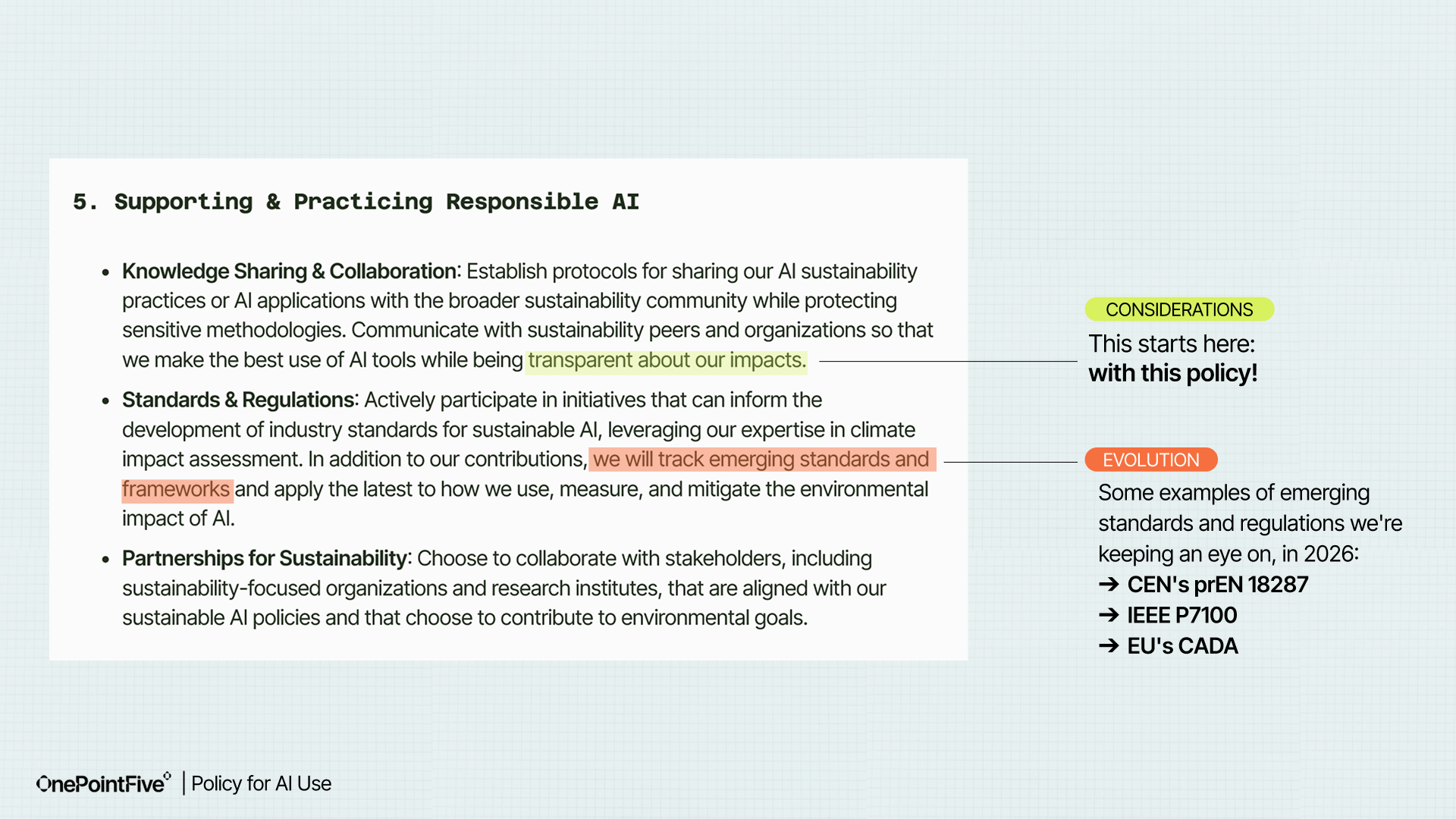
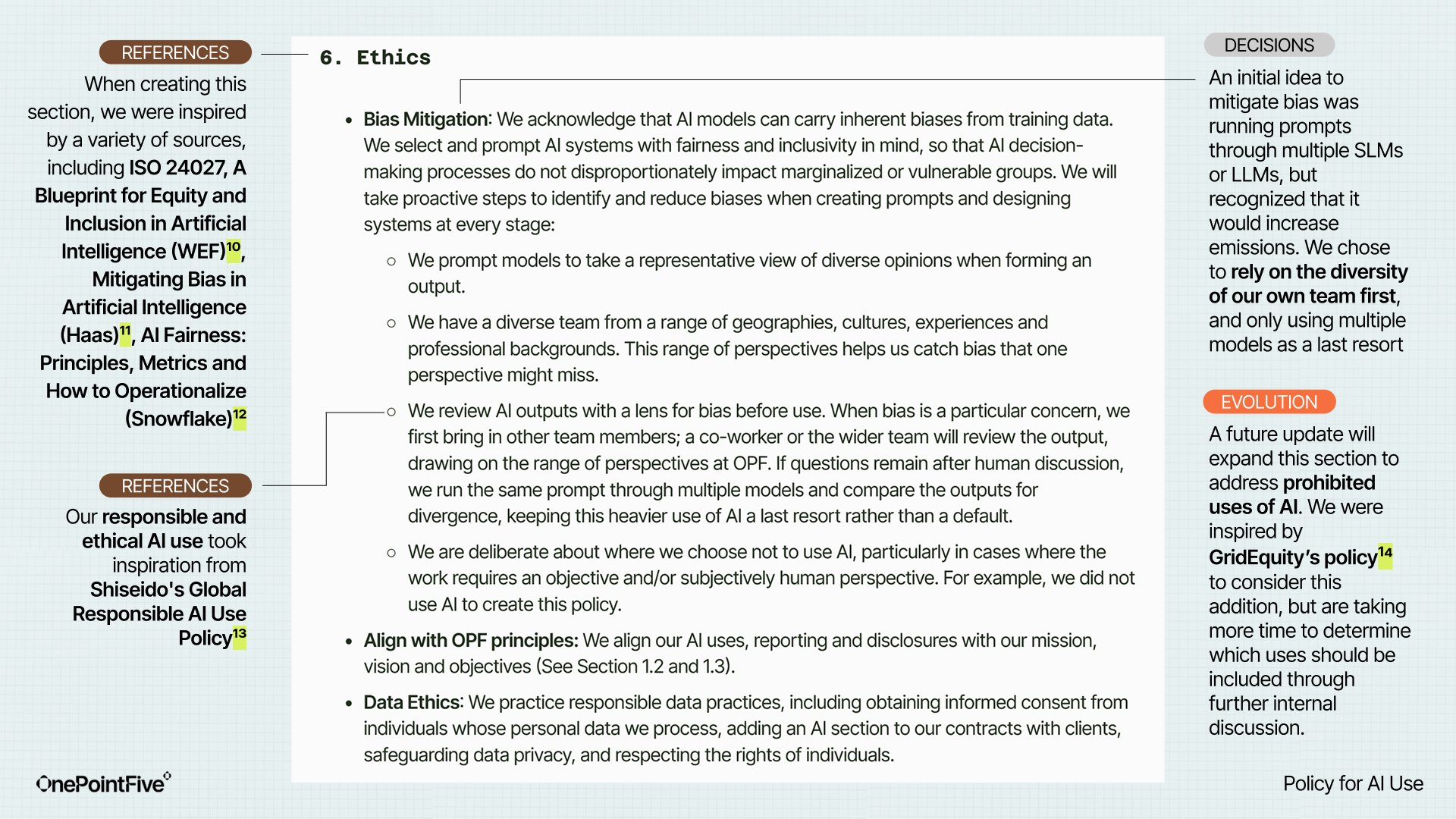
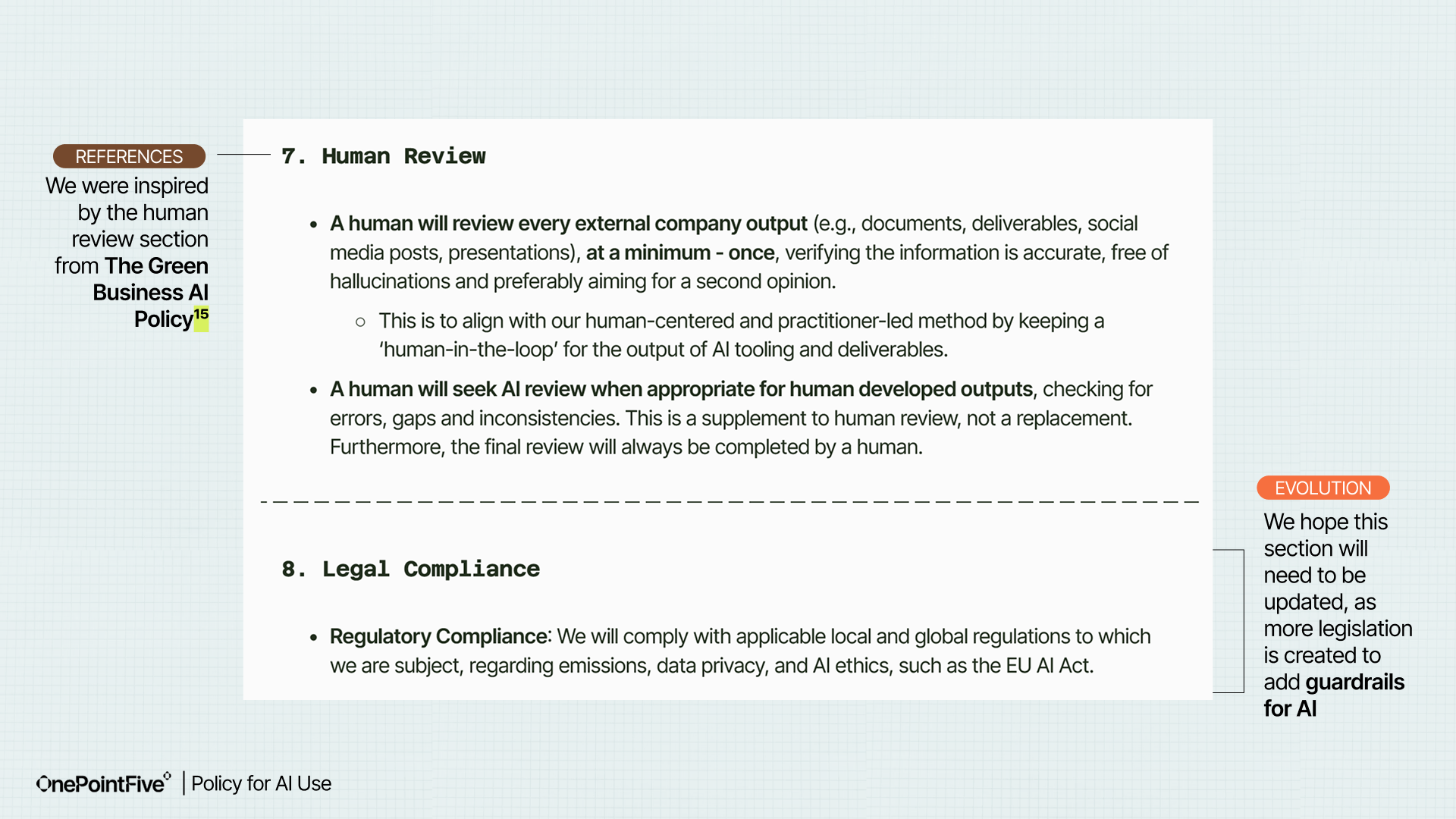
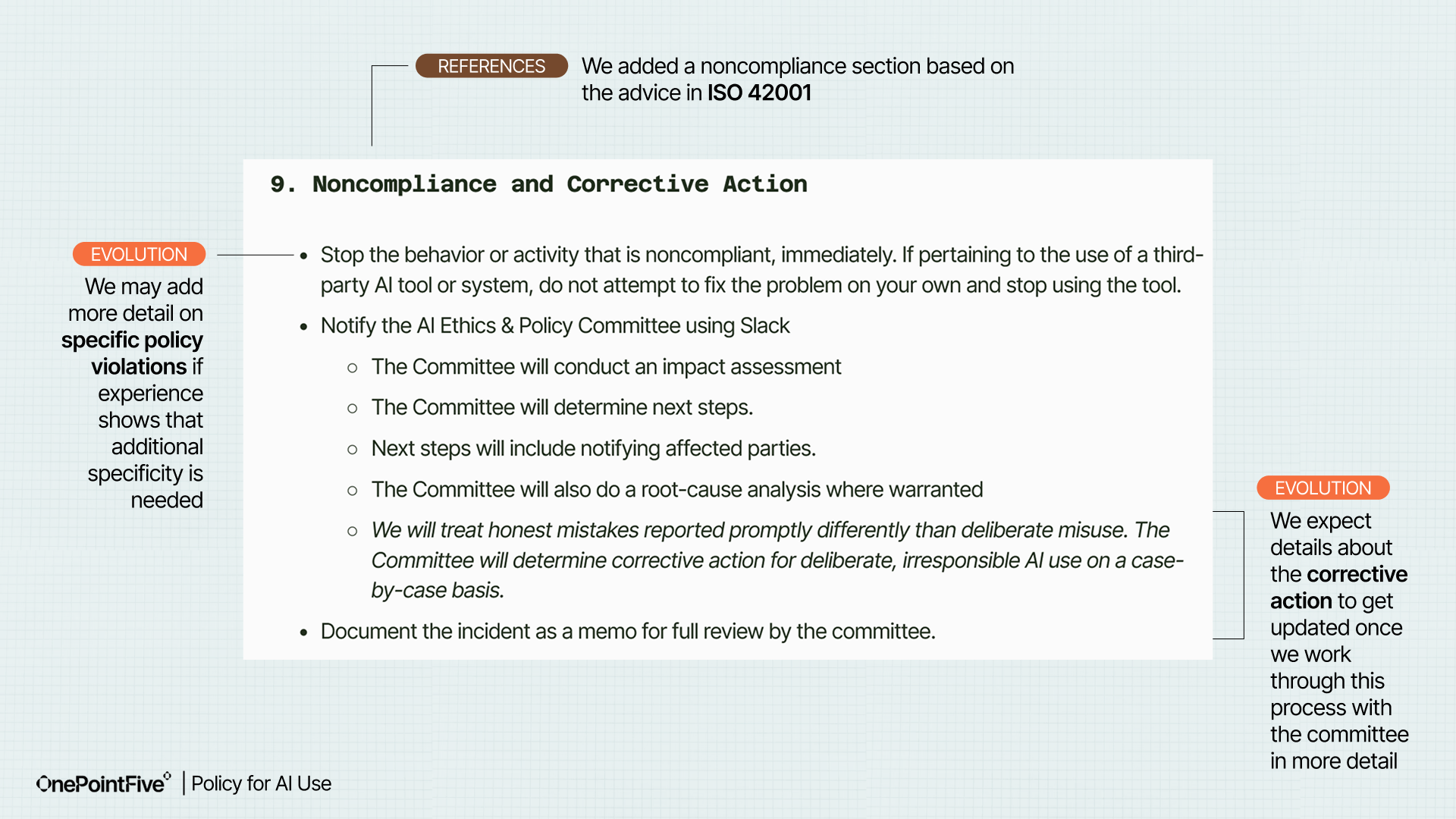
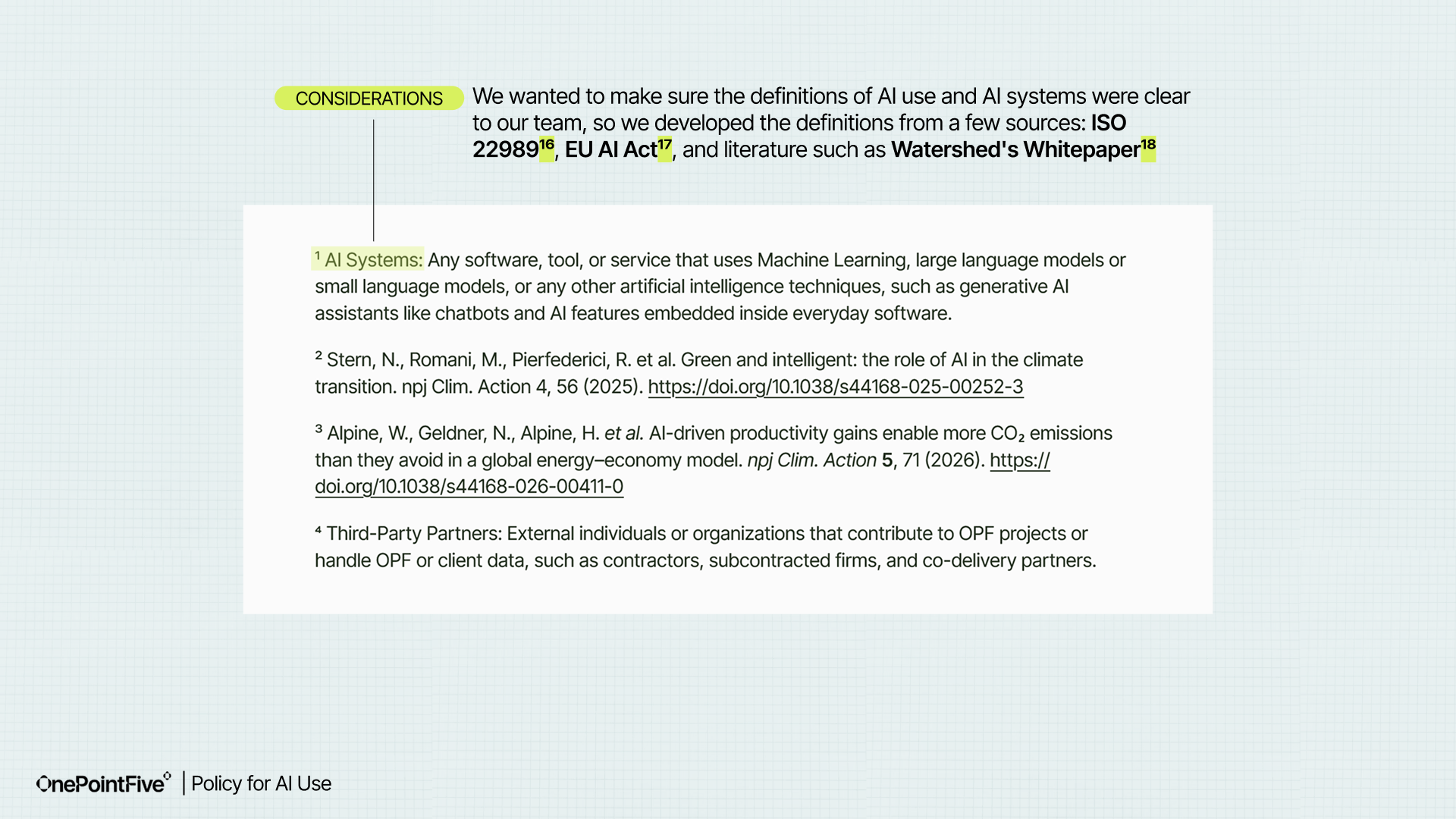
Sources referenced throughout the gallery can be found in the footnotes at the bottom of this post
Read the full policy
If you want to reference the policy or share it with your team, you can find the full, unmarked version here.
This is a conversation starter, not the final product. If you see something we've missed, or i if your team has found better ways to measure AI's environmental footprint, set usage guardrails, decide when AI belongs in the workflow at all, or approach responsible AI in other way, we'd love to hear from you.
Sources & References
¹ SAP Global AI Ethics Policy (2022)
² Brandon Galang, Galang Consulting
³ Susannah Hill, Cloud Sustainability Watch
⁴ Green Software Foundation
⁵ World Wide Web Consortium
⁶ But is Your Website Green? Ecoweb Project Report (2025)
⁷ CEN's prEN 18287 (2025)
⁸ IEEE P7100 (2024)
⁹ EU's CADA (2026)
¹⁰ A Blueprint for Equity and Inclusion in Artificial Intelligence, WEF (2022)
¹¹ Mitigating Bias in Artificial Intelligence, Haas (2020)
¹² AI Fairness: Principles, Metrics and How to Operationalize, Snowflake
¹³ Shiseido's Global Responsible AI Use Policy
¹⁴ GridEquitity’s AI Policy (2026)
¹⁵ The Green Business AI Policy (2026)
¹⁶ ISO 22989 (2022)
¹⁷ EU AI Act (2024)
¹⁸ Estimating GHG Emissions from AI Use, Watershed's Whitepaper (2026)
