Cutting Through the Green Noise: The Sustainability Talent Gap
By Vanesa Vargas (Marketing Coordinator) and Ysabella Langdon (Marketing Manager)
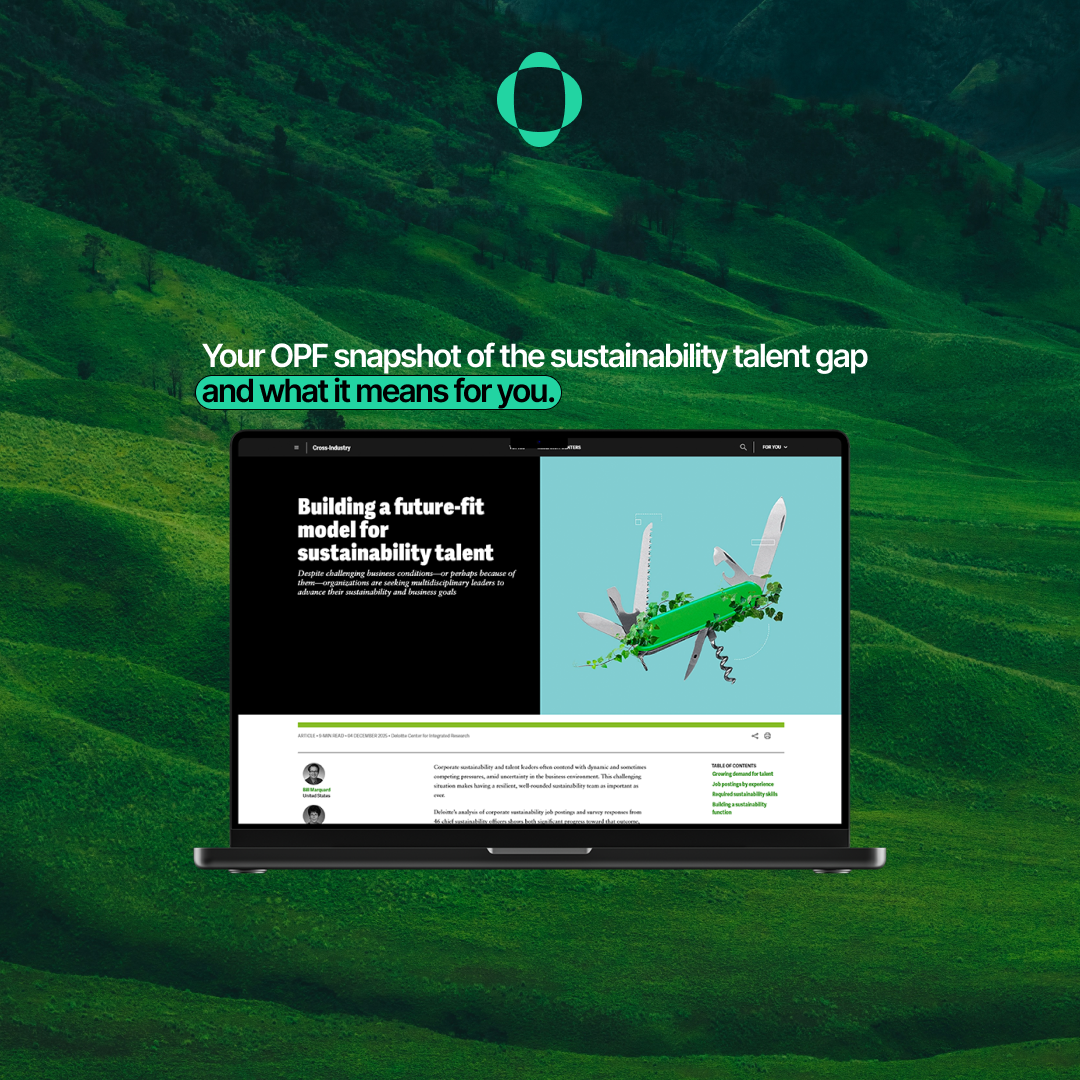
Deloitte Center for Integrated Research’s latest article on Sustainability Talent reveals a significant bottleneck in the green workforce. While the mass hiring surge between 2019 and 2022 filled organizations with mid-level talent, the pipeline for entry-level talent has stalled, creating a top-heavy structure that is difficult to sustain. Organizations are now moving away from hiring "climate generalists" in favor of multidisciplinary leaders who can translate environmental targets into financial value and operational reality.
The Data Snapshot
500%: The spike in mid-career sustainability job postings from 2019 to 2022 as companies rushed to deliver on public commitments.
6 to 1: The ratio of mid-level roles to senior positions in 2024, highlighting an uneven hiring distribution that makes career progression more competitive.
88%: The percentage of Chief Sustainability Officers who expect their head count to grow or remain stable through 2026, despite a cooling labor market.
1,280: The explosive growth rate of sustainability roles in the retail sector, which outpaced tech and finance in the latest hiring wave.
🧑🏫 The Reality
Sustainability is maturing from a niche specialty to a core business requirement.
We are seeing a strategic shift from specialized silos to integrated business operations. The cooling market isn't a sign of decline, but of stabilization: organizations now require professionals who possess both technical scientific knowledge and sharp business skills. And AI isn't killing the career; it is raising the bar for the high-value skills (critical thinking, change management) that machines cannot replicate.
🔔 The Alarm
“The green jobs bubble is bursting and AI will automate the field.”
A slight drop in 2025 hiring and the rise of generative AI tools have sparked fears that sustainability was just a trend. There is fear that entry-level sustainability roles are being permanently erased by automation.
Your Action Plan
For job seekers
Master business skills beyond sustainability ones: Position yourself as a professional who can speak both "carbon" and "business" to prove you understand the bottom line.
Look beyond the title: Look for roles in operations, data science, supply chain and other areas that require a sustainability lens rather than limiting your search to "sustainability manager" titles.
For active professionals
Learn the language of finance: Prioritize business case development and financial reporting principles to ensure your initiatives remain resilient during budget cycles (by showing how they save the company money or lower its risk)
Become an AI collaborator: Use automation for data-heavy reporting tasks so you can pivot your time toward stakeholder engagement and organizational influence.
For businesses & leaders
Hire the next generation: Invest in intentional entry-level pathways and rotational programs to ensure you aren't left with a talent vacuum in the next five years.
Match your team to your goals: Choose a team model (whether centralized or decentralized) that fits your specific legal and operational needs rather than simply mirroring your competitors.
The Bottom Line
Sustainability isn't a niche department anymore: it is part of how a company stays profitable and resilient in a changing world, and requires professionals who combine technical rigor with the ability to drive commercial value.
Enjoyed this edition? Click here to explore the rest of our Cutting Through the Green Noise series for concise breakdowns of the sustainability reports, research and trends shaping climate and business.
Dive even deeper into recent trends in Sustainability Hiring & Workforce
If this talent shift sounds familiar, you’re not alone. In our playbook “Forget the Sustainability Unicorn: How to Upskill a Climate Workforce,” we break down exactly how organizations can move beyond unrealistic hiring expectations and build sustainability capability from within.
Backed by insights from 30+ industry experts and 3,500+ climate professionals, it offers practical steps to close the green skills gap and create teams that can deliver real business impact.