By Laura Latorre (Sustainability Training & Community Coordinator), Vanesa Vargas (Marketing Coordinator) and Ysabella Langdon (Marketing Manager), OPF.
Many of the decisions that shape a company's emissions, resilience and competitiveness are made in procurement, finance, research and development (R&D) and government affairs. When climate considerations don't make it into those decisions, opportunities to make environmental progress can be missed.
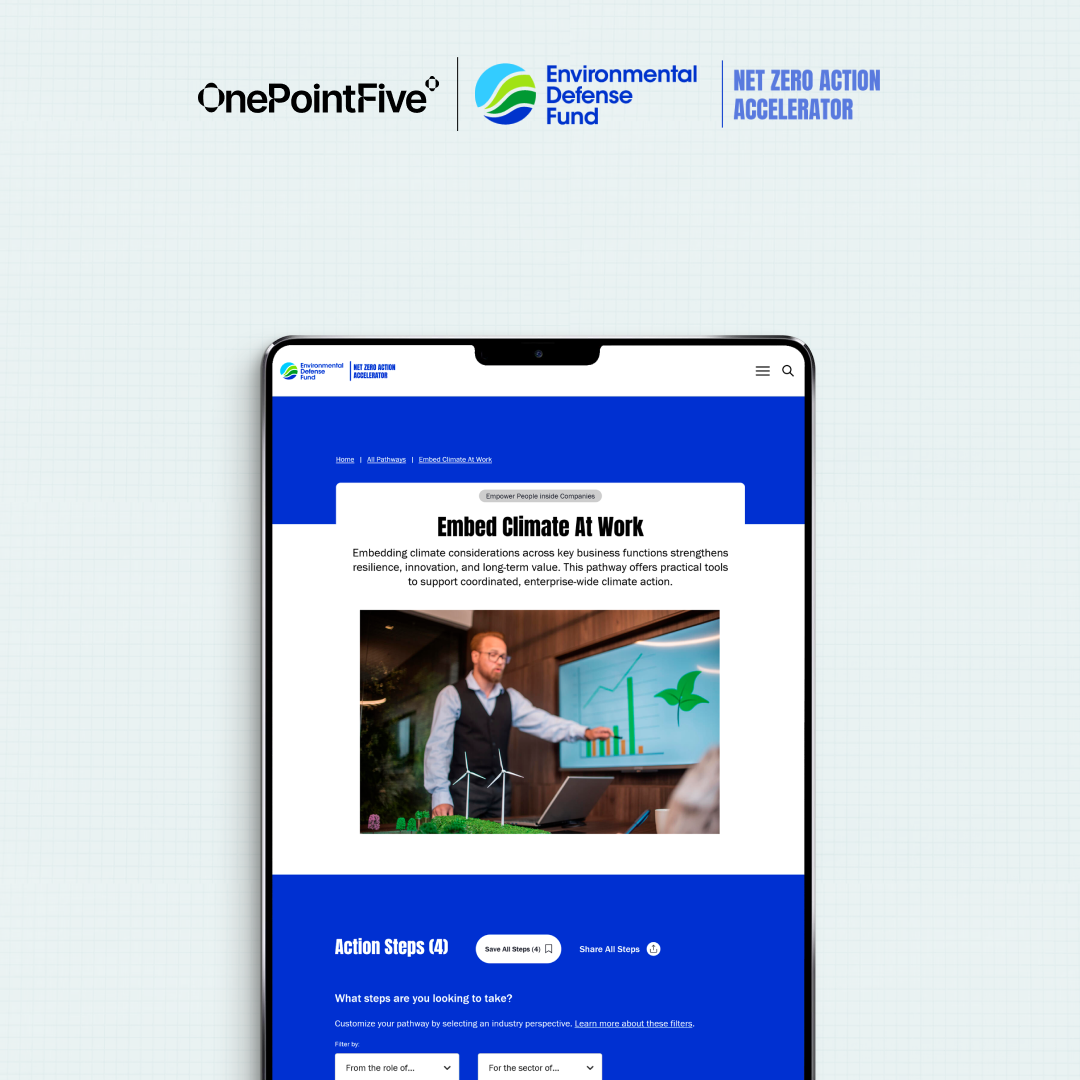
That’s why we've collaborated with the Environmental Defense Fund’s Net Zero Action Accelerator (NZAA) on the new Embed Climate at Work action pathway to help teams turn climate goals into everyday business decisions.
What is it
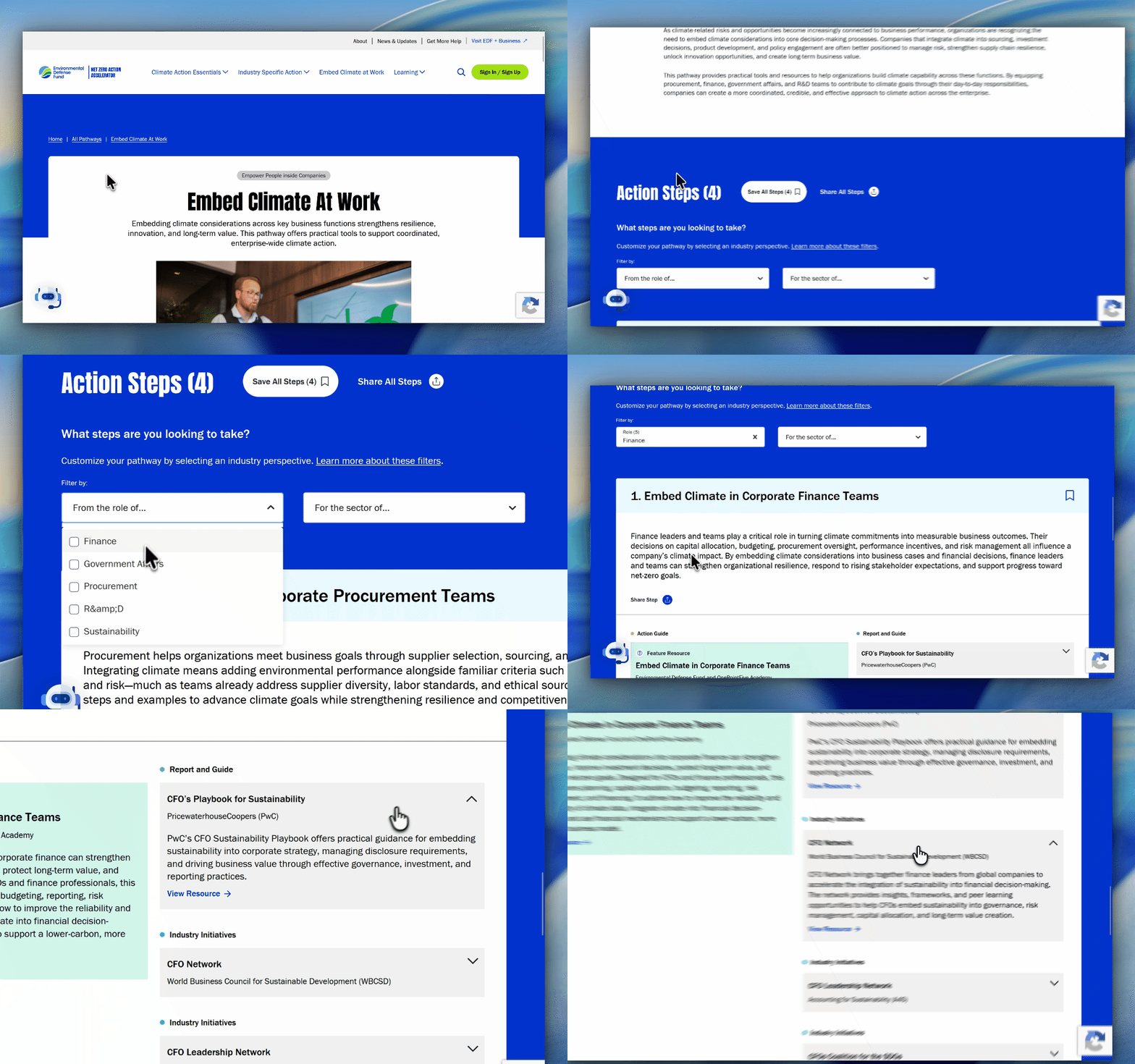
Each guide offers practical steps, real-world examples, and resources to help professionals take action within their own functions. You can filter the pathway by role and sector to find guidance relevant to your work.
Here's a look at what each function focuses on:
Procurement: Sourcing decisions with climate in mind. Add environmental performance to the criteria you already use, alongside cost, quality, and risk. Scope 3 emissions can account for as much as 90% of a company's environmental footprint, and the guide identifies potential cost savings of 8% to 20% through measures such as waste reduction and more efficient use of energy, water, and raw materials.
Corporate Finance: Bring climate into numbers. Factor sustainability considerations into planning, capital allocation, budgeting and risk management, and make your climate data more reliable and verifiable so it can support better investment decisions.
Product Design and R&D: Consider climate early in product development. Evaluate materials, technologies, and environmental impacts during the design process, alongside cost, performance, customer preferences, and regulatory requirements.
Government Affairs: Align your policy work with your climate commitments. Identify opportunities to coordinate with sustainability teams and take a more consistent, transparent approach to public policy engagement.
Behind the guides: built for the people doing the work
We reviewed and shaped all four action guides, checking each recommendation against how procurement, finance, product design and government affairs teams operate day to day.
Grounding each step in systems teams already use
In corporate finance, we drew on our work with fund managers in the Asia-Pacific (APAC) region to show how incentives can be tied to the leaders who control outcomes, such as the C-suite and procurement leads. We also mapped how climate data flows into the general ledger, cost centers and entity fields of the systems finance teams already run.
For product design, we linked climate criteria to tools practitioners know well: stage gates, balanced scorecards, design of experiments to cut physical test runs and digital simulation to reduce lab waste. This builds on our work measuring product-level impact with life cycle assessments (LCAs).
Translating technical terms into plain language
Readers without a sustainability background should still be able to act on every step. So Environmental Product Declarations (EPDs), for example, became "standardized, independently verified documents reporting a product's life-cycle impacts." It's the same approach we take when teaching our Life Cycle Assessment short course.
Choosing case studies that reflect real internal decisions
We reviewed and strengthened the case studies to better reflect how companies factor climate into internal decisions. One example is Organic Valley, a US-based dairy cooperative that budgets for its own decarbonization strategies and secures government grants along the way.
Curating resources each role can put to use
For every role, we selected tools that are easy to understand and directly applicable, such as the Circular Design Guide for product teams and the UN Global Compact’s Toolkit for sustainable procurement.
Who is it for
If you work in: procurement, finance, R&D or government affairs, from CFOs to sourcing and product teams, this is your starting point for building climate into your role.
If you're part of a sustainability team, the guides can help you bring the functions you work with into the conversation and identify opportunities to embed climate into everyday business decisions.
Who is it for
At OPF, we believe the workforce of the future needs green skills built into roles across the business, including the many that don't carry "sustainability" in the title. These guides show what that looks like in practice: professionals building climate capability within the jobs they already do, and driving change from where they sit.
Ready to embed climate into your role? Find the guide for your function and sector, put the first steps into practice, and share it with your team.
Ready to build these skills yourself?
The EDF Action Guides show where climate fits in your role. Our OPF Academy short courses help you put it into practice:
If you’re in procurement and finance teams: Map Scope 1, 2 and 3 emissions and move from supplier data to audit-ready results with our Carbon Accounting course, then turn that data into credible, decision-useful reports with our Sustainability Reporting & Disclosures course.
If you’re in Product design and R&D teams: Spot environmental hotspots from raw materials to end of life, and use them to guide design decisions with our Life Cycle Assessment course.