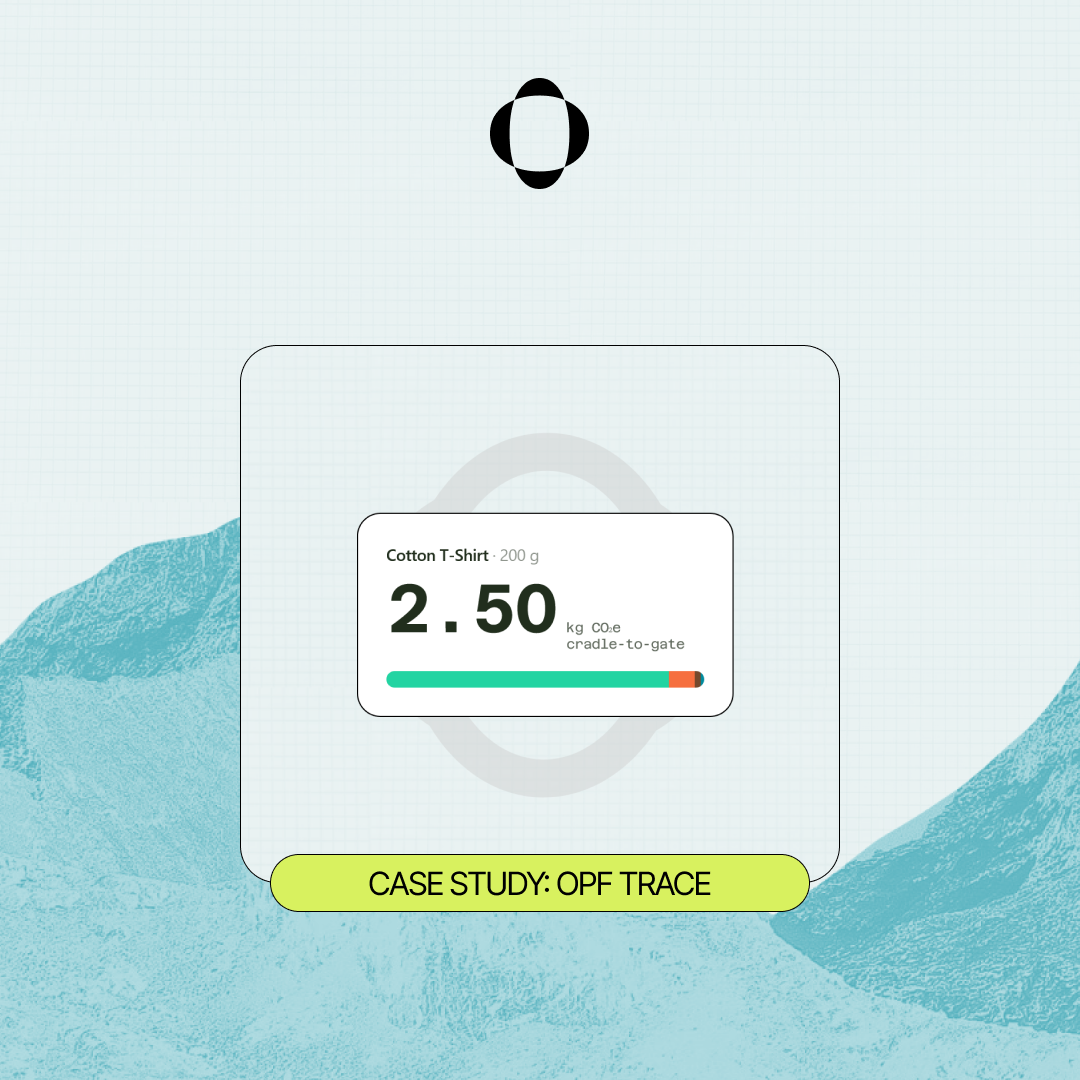
By Matthias Muehlbauer (COO/CTO and Co-Founder) and Jack Kozyrski (Senior Associate), OPF. A case study exemplifying the work in our Sustainability and Accelerator Track C: Buy, Build & Scale AI Responsibly
OPF Challenge
OnePointFive Academy's Life Cycle Assessment course has always featured a hands-on calculator that lets students work through carbon footprinting, using a beauty product's packaging as a case study: going from its packaging and materials to energy use, transportation, and waste. Keeping tools like this current with the state of LCA work requires regular updates – work that has traditionally meant leveraging outsourced tools, adding additional team research time or updating our content.
OPF’s Solution
This time, we leveraged AI responsibly to build the new calculator, OPF Trace, entirely in-house. This empowered our team to own the process end-to-end: defining what our learners actually needed, accelerating the timeline, and delivering a higher-quality learning tool for our students, using a tool we could fully own.
OPF Methodology
1. Scope before code
We first defined the calculator's required functionality in tandem with updating the lab exercise, making sure every feature served a clear learning purpose.
We then provided OPF's design guidelines, down to fonts and color palette. Every visual element was manually assessed, approved, and refined to make sure the tool felt consistent with the OPFA learning experience.
Finally, we compiled a researched list of open-source emission factor databases and peer-reviewed papers covering the specific emission factors learners would need
2. Build with AI, deliberately
We used Claude Code to turn our requirements documentation into a working MVP
We also used two open-source Claude Code skills: one for structured planning and sub-agent-driven development (allowing us to use simpler models for simple tasks and complex models only where needed), and another one to support UI/UX consistency
Throughout the process, we followed a YAGNI ("You Aren't Gonna Need It") approach: building only what students actually needed, avoiding software bloat and unnecessary features
3. Validate and refine
We shipped the initial version internally and incorporated team feedback
We then finalized the new LCA lab around the refined tool, making sure the calculator and learning experience worked together
Finally, we ran a separate research stream to confirm the validity of emission factor sources and built a full methodology page documenting calculations and compiled sources
Key Outcomes

The result is OPF Trace Tool: a free calculator, shipped and in active use in the LCA course. It lives at trace.opf.degree, with sign-in tied to OPFA Circle membership credentials so LCA participants can access it directly as part of their learning experience.
The final version now allows a user to:
Define product impact across materials, waste generation, energy consumption, and transportation
Generate a shareable results page breaking down the CO₂e of each component
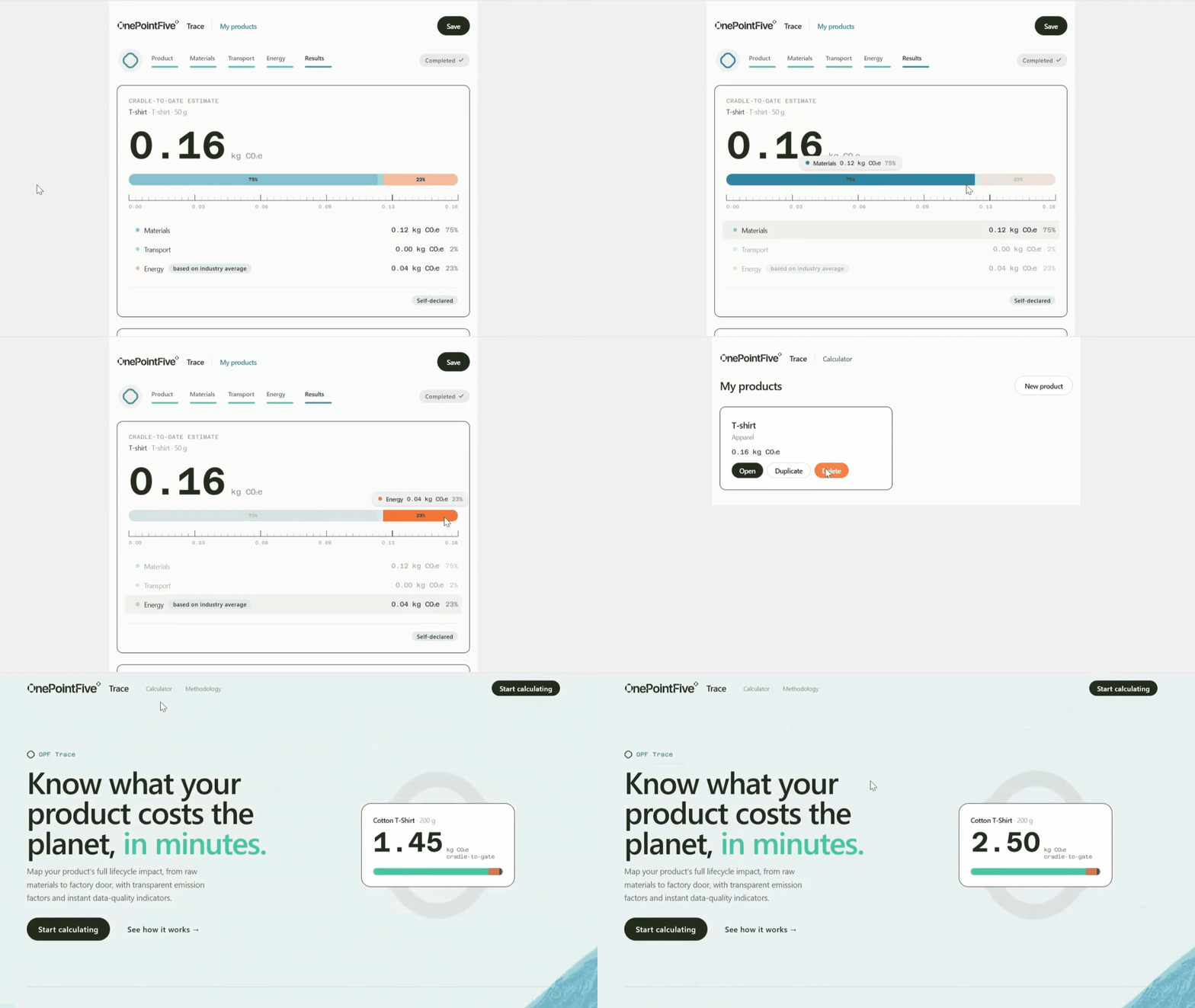
We've already received great feedback from OPFA students using the new tool, but the bigger outcome for our team is the process itself: we now have a tool we can maintain, understand, and can continue improving in-house.
Why a Responsible AI Approach Matters
Building calculators, dashboards, and other tools can accelerate climate work and training. AI-assisted development has its own footprint, which is why our approach conserved compute where possible, using simpler models for simple tasks and building only what learners needed.
To experience the updated LCA lab and OPF Trace Tool, enroll today in our Life Cycle Assessment course: a self-paced course designed to help professionals build practical LCA skills.